How water gets into a basement
- Surface water: rain running toward the house and pooling against the foundation
- Groundwater: a rising water table pushing through slab cracks and the wall-floor joint
- Window wells and exterior stairwells: drains clogged with leaves fill up like a tub
- Sewer surcharge: the municipal sewer backs up and pushes water through floor drains
Outside: grading, gutters and window wells
- Clean gutters in spring and fall; make sure downspouts discharge at least 4–6 feet from the foundation
- Regrade soil so it slopes away from the house
- Install clear window well covers and keep well drains clear
- Clear the drain at the bottom of exterior basement stairs before storms
- Seal visible foundation cracks and gaps around pipe penetrations
Sump pumps and backup power
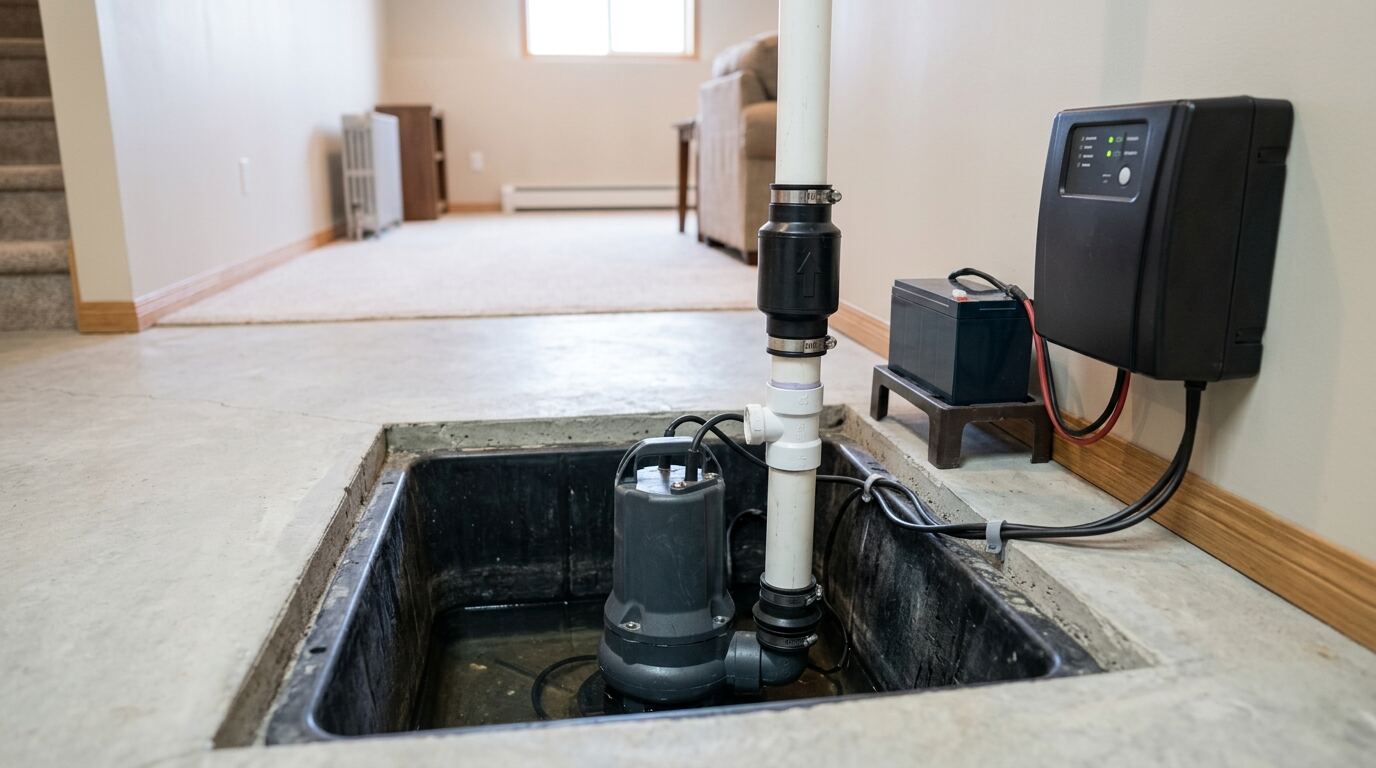
A sump pump collects water that reaches the pit from drain tile or the soil below the slab and pumps it out. The weak point is power: storms that bring the most water also knock out electricity.
- Test the pump every season by pouring water into the pit
- Add a battery backup pump or a water-powered backup where allowed
- Install a high-water alarm
- Make sure the discharge line isn’t frozen or draining right back toward the house
- Replace pumps older than about 7–10 years
Backwater valves
A backwater (backflow) valve on the building sewer lets wastewater out but closes when the street sewer surcharges. In neighborhoods with combined sewers, such as many parts of Queens, it can prevent sewage from coming up through basement drains. Installation generally requires a licensed plumber and may require a permit.
Inside the basement
- Store valuables on shelves, not on the floor, and in plastic bins rather than cardboard
- Consider tile or luxury vinyl instead of carpet
- Run a dehumidifier in summer and keep humidity under about 50%
- Keep furnaces, water heaters and electrical panels raised where possible
The insurance gap
Standard homeowners policies generally exclude flood and water that backs up through sewers or drains. The fix is usually two separate products: a water/sewer backup endorsement on your homeowners policy, and a flood insurance policy for surface water. Ask your agent what limits you have — backup endorsements often carry modest limits. More: Does insurance cover water damage?
Already flooded? See flood cleanup and sewage cleanup.