
Yes. With the homeowner’s written authorization, a restoration company can submit invoices and supporting documentation to the insurance carrier, and payment may be issued to the contractor or jointly to the homeowner and contractor according to the carrier’s process. Your deductible remains your responsibility, as do items the policy doesn’t cover — we explain both before work begins.
What Blue Arrow does for your claim
Cause of loss
Photos of the leak point, the failed pipe section or the roof damage, and the removed parts kept as evidence that the loss was sudden and accidental.
Extent of damage
Thermal images and moisture readings that objectively show which walls and floors were affected and why removal was necessary.
Job and contents records
Daily drying logs, equipment lists, removed materials and damaged contents, with photos organized room by room.
Adjuster meetings
We walk the adjuster through the site, explain the scope and the standard behind it, and answer technical questions.
How a water or fire claim typically works
- Mitigate: policies generally require you to take reasonable steps to prevent further damage — shutting off water, tarping, extraction. Those mitigation costs are normally part of the claim.
- Document: photograph the scene before cleanup and keep damaged items.
- Report promptly: call your carrier or agent and note the claim number and adjuster’s contact information.
- Professional assessment: the restoration company inspects, documents and writes a scope.
- Adjuster inspection: in person or virtual, to confirm coverage.
- Work and supplements: work proceeds on the agreed scope; hidden damage found during the job is reported as a supplement.
- Close-out: final invoice and completion photos are submitted and the carrier pays according to the policy.
Common policy types at a glance
Most US homeowners carry an HO (homeowners) policy, which combines property and liability coverage in one affordable package.
| Form | Name | For | Coverage basis (simplified) |
|---|---|---|---|
| HO-2 | Broad Form | Owner-occupied homes | Dwelling and personal property on named perils |
| HO-3 | Special Form | The most common homeowners policy | Dwelling open perils; personal property named perils |
| HO-4 | Renters | Tenants | Personal property only |
| HO-5 | Comprehensive Form | Owners wanting broad coverage | Dwelling and personal property open perils |
| HO-6 | Condominium Form | Condo and co-op owners | Personal property and in-unit improvements |
| HO-8 | Modified Coverage | Older and historic homes | More limited coverage |
Full comparison: HO-2 vs HO-3 vs HO-5 vs HO-6. Each peril explained: the named perils in homeowners insurance.
What’s usually covered — and what isn’t
| Usually covered | Usually excluded or requires an endorsement |
|---|---|
| Floor and wall damage from a pipe that suddenly bursts | Long-term seepage, wear and tear, corrosion |
| Sudden failure of a water heater or washing machine hose | Repairing the pipe or replacing the water heater itself |
| Fire, lightning and smoke damage | Surface flooding (requires flood insurance) |
| Rain entering after wind or hail damages the roof | Sewer and drain backup (requires an endorsement) |
| Structural damage from the weight of ice and snow | Earthquake and earth movement (separate policy, common in California) |
| Frozen pipes when reasonable heat was maintained | Frozen pipes in a vacant home that wasn’t heated or drained |
General information only. Coverage varies by state law and by each carrier’s policy form; your policy language and your carrier’s review determine the outcome.
Six practical tips for homeowners
- Check your deductible and any special sublimits (mold and water backup are often capped) before you file
- Don’t throw away damaged carpet, furniture or materials before they are photographed and listed
- Keep every receipt: hotels, meals and emergency purchases may fall under additional living expenses
- Log every call with your carrier — date, name and what was said
- If the adjuster’s estimate is far below the actual damage, you can request a supplement and re-inspection
- Read any authorization you sign so you understand its scope and costs
Insurance claim FAQ
Can I choose my own restoration company, or do I have to use the insurer’s vendor?
In general, homeowners have the right to choose a restoration company they trust. The carrier’s preferred vendors are a suggestion, not a requirement. Either way, the claim is paid according to the policy and the actual loss.
The adjuster hasn’t come yet. Can you start drying?
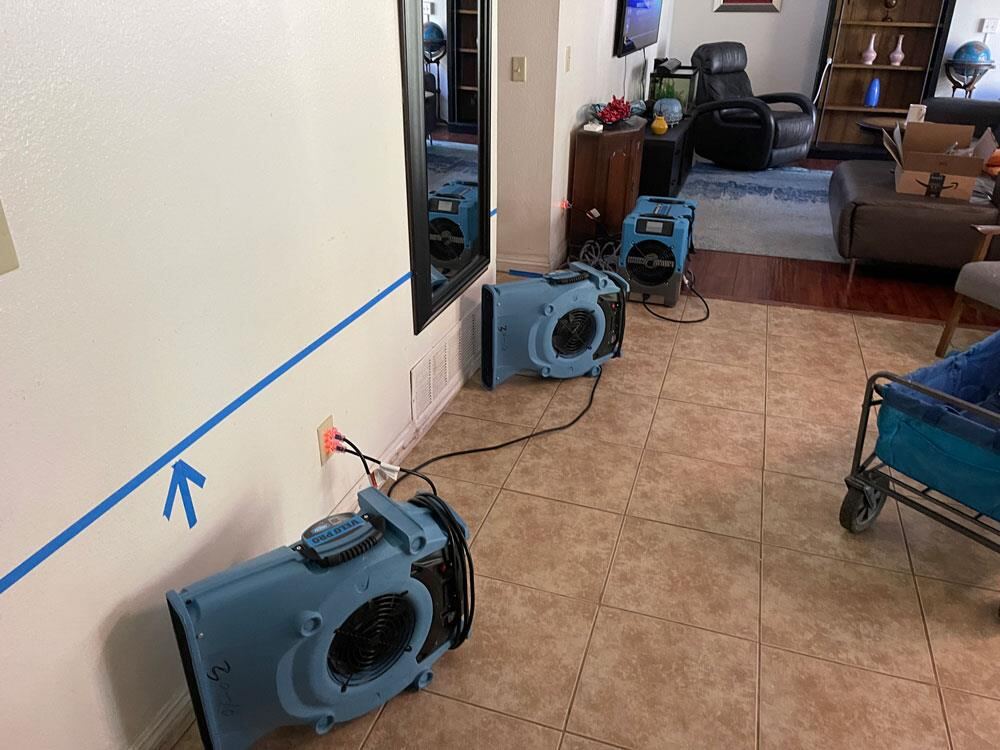
Yes, and you should. Policies generally require you to prevent further damage, and letting water sit while you wait can put the additional damage outside coverage. The key is to document first — we record the entire mitigation.
What if my claim is denied?
Ask the carrier for the specific policy language behind the denial in writing and check whether the cause of loss was identified correctly. Additional inspection records can help, and you may consult a licensed public adjuster or an attorney. Blue Arrow provides factual job and inspection records, not legal advice.