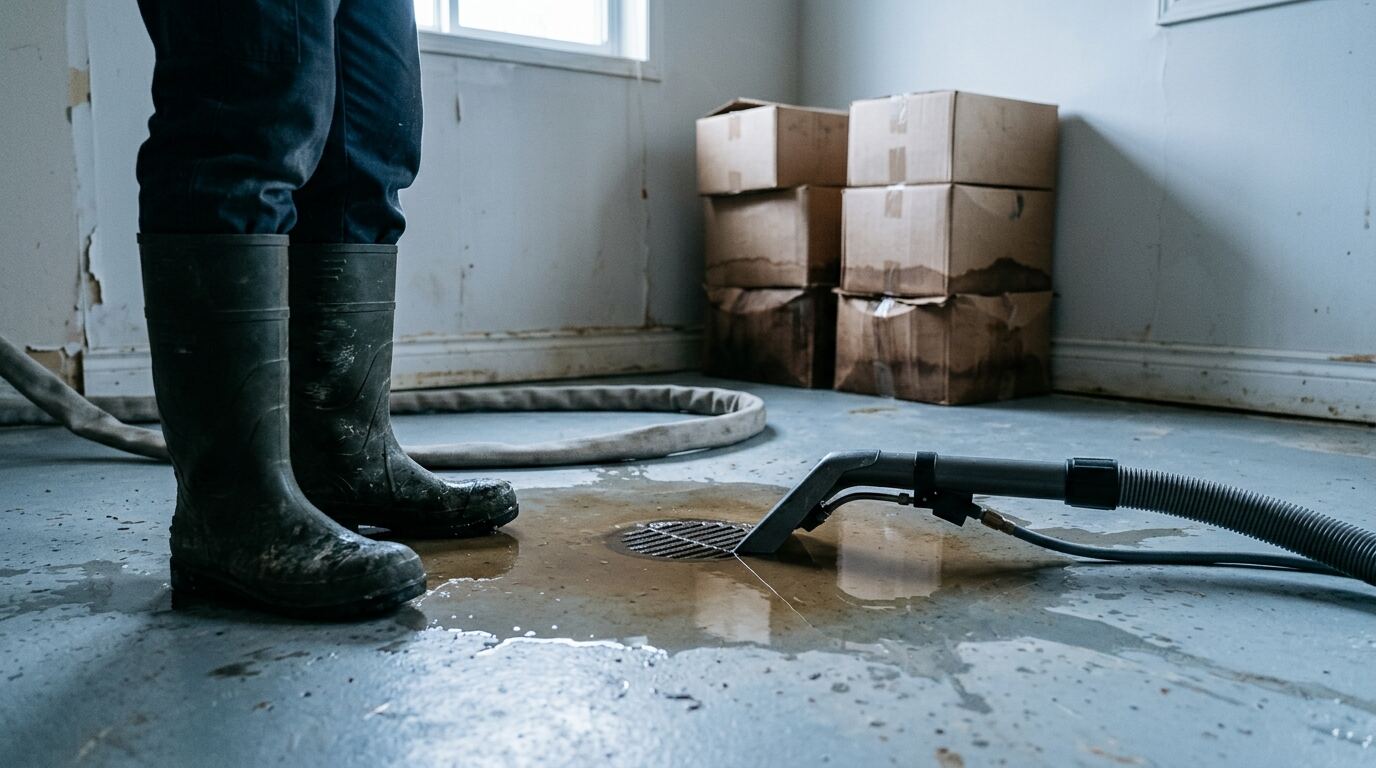
Keep children, pets and anyone with a weakened immune system away. Stop using water in the house — every flush and every load of laundry adds to the backup. Don’t run the HVAC system if its returns are in the affected area, and don’t try to clean with household bleach.
What is a sewage backup?
A sewage backup happens when wastewater can’t leave the house through the lateral line and comes back up through the lowest fixtures — usually a basement floor drain, toilet or shower. Common causes include tree roots in older clay or cast-iron laterals, grease and “flushable” wipes, a collapsed pipe, municipal sewer surcharge during heavy rain and, in homes with septic systems, a full or failed tank.
How we clean up sewage
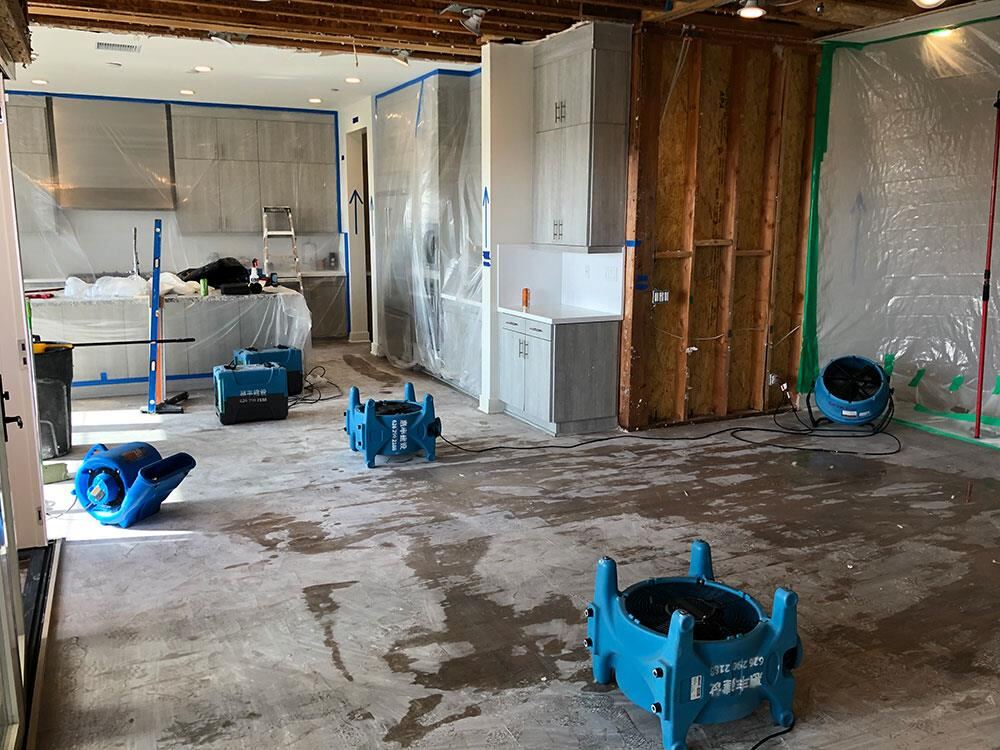
- Protection and containment: technicians wear respirators, gloves, boots and suits; the area is sealed off with plastic to keep contamination from spreading.
- Extraction: liquid and solid waste are removed with dedicated extraction equipment.
- Removal of porous materials: per the IICRC S500 standard, sewage-soaked carpet, pad, drywall, insulation and upholstered items are removed and disposed of properly.
- Cleaning and disinfection: hard surfaces and framing are cleaned and treated with EPA-registered disinfectants.
- Drying and air treatment: dehumidifiers and air movers dry the structure while HEPA air scrubbers and deodorization address airborne contaminants and odor.
- Verification and rebuild: moisture readings confirm the area is dry before reconstruction begins.
What can be saved and what must go?
| Material or item | Usually |
|---|---|
| Wall-to-wall carpet and pad | Discard |
| Drywall and insulation below the water line | Remove, typically with a margin above the line |
| Upholstered furniture, mattresses, pillows | Discard |
| Concrete, tile, solid wood framing | Clean, disinfect and dry |
| Hard plastics, metal, glass | Clean and disinfect |
| Clothing and washable textiles | Case by case; professional laundering |
| Documents and photographs | Can sometimes be freeze-dried by specialists |
Is a sewage backup covered by insurance?
Many standard homeowners policies exclude damage from water that backs up through sewers or drains unless the policyholder added a water / sewer backup endorsement. If the backup was caused by a sudden break in a pipe inside the home, the analysis may be different. Check your declarations page, report promptly, and don’t throw out damaged items before they are photographed and listed. Read more in Does insurance cover water damage?
Reducing the chance of another backup
- Have the lateral line camera-inspected and cleaned if you have large trees or an older house
- Install a backwater valve, where permitted, to stop municipal sewer surcharge from entering
- Never flush wipes, paper towels or grease, even if the package says “flushable”
- Keep septic tanks on a regular pumping schedule
Sewage cleanup FAQ
Is it safe to stay in the house after a sewage backup?
If the backup is confined to a basement that can be closed off, many families stay in the rest of the house. Young children, older adults, pregnant women and anyone with respiratory or immune conditions should avoid the home until cleanup and disinfection are complete.
How long does sewage cleanup take?
Extraction and removal typically take a day. Drying and disinfection usually run another three to five days depending on the materials, followed by rebuild.
Should I call a plumber or a restoration company first?
Both are needed. The line must be cleared or repaired so the backup stops, and the contamination must be cleaned up. Call us — we coordinate the drain clearing and handle the cleanup.