Understanding mold
Mold spores are everywhere, indoors and out. They only become a problem when they land on a damp surface with something to feed on — the paper face of drywall, wood, dust, carpet backing. Give them moisture and they colonize, release more spores and produce the musty odor most people notice first. Some molds produce allergens and irritants that can trigger asthma, sinus problems and skin reactions, particularly in children, older adults and anyone with a respiratory condition.
The key fact: mold is a moisture problem. Removing mold without fixing the water source only resets the clock.
Found mold? Don’t do this
- Don’t touch or scrape it with bare hands
- Don’t blow fans across it — you’ll spread spores to clean rooms
- Don’t spray bleach on drywall or wood; it doesn’t reach roots in porous materials and adds moisture
- Don’t paint over it
- Don’t run the HVAC system if mold is in or near the ductwork
Where mold grows most often
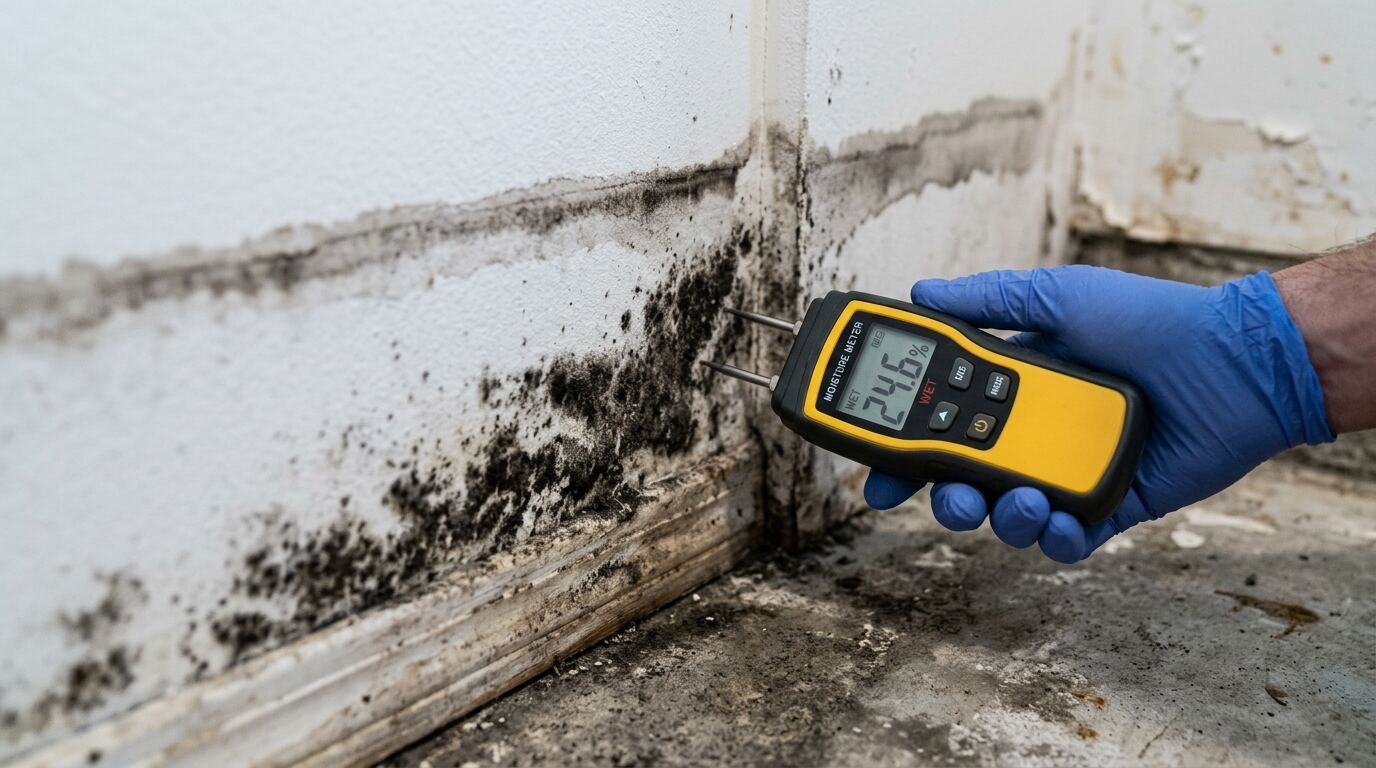
- Finished basements: behind drywall, under carpet and in storage boxes on concrete floors
- Bathrooms: poorly vented showers, behind tile with failed grout
- Attics: roof leaks, bathroom fans vented into the attic, poor ventilation — common on Long Island
- Under sinks and behind appliances: slow drips nobody noticed
- Crawl spaces and closets on exterior walls
- After any water loss that wasn’t dried properly
Our mold remediation process
- Inspection: visual assessment, moisture mapping and thermal imaging to define the affected area and find the water source. Independent air or surface testing can be arranged when needed.
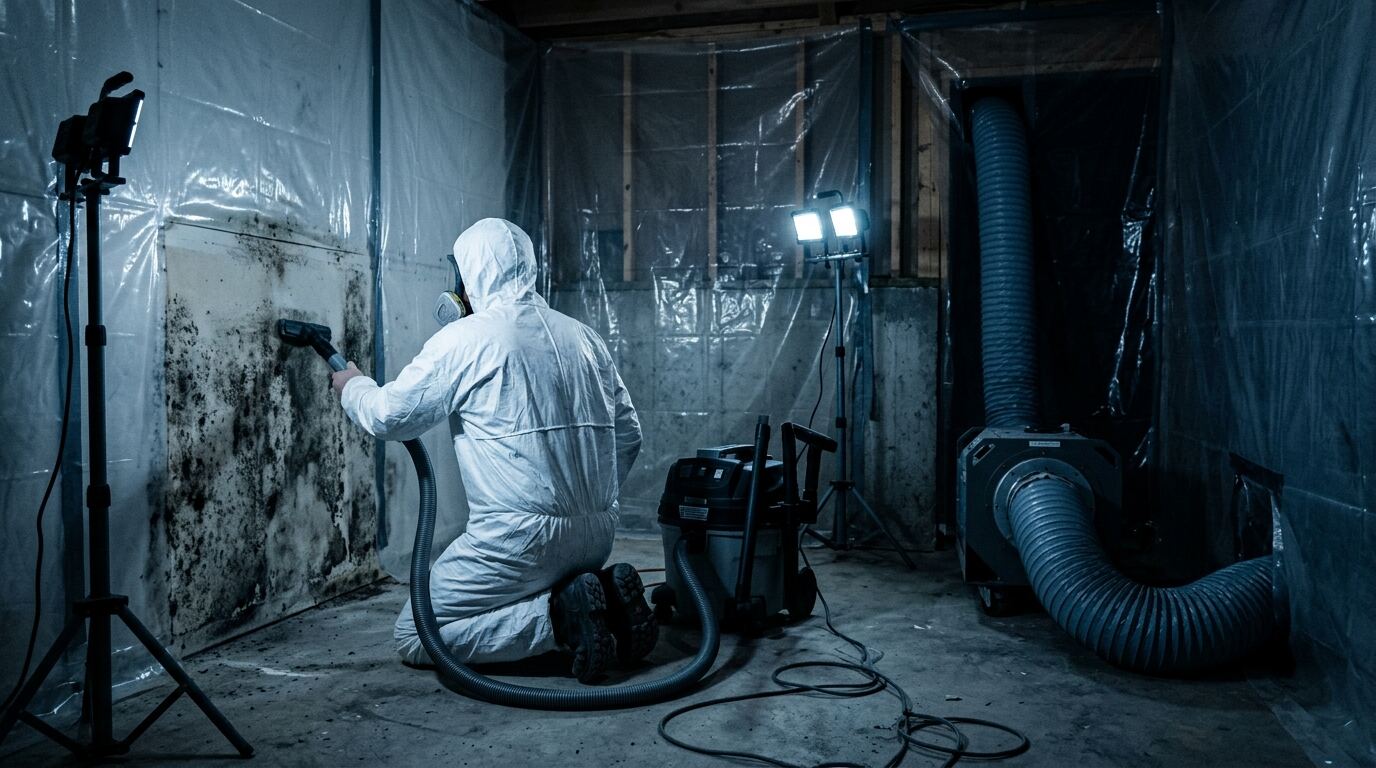
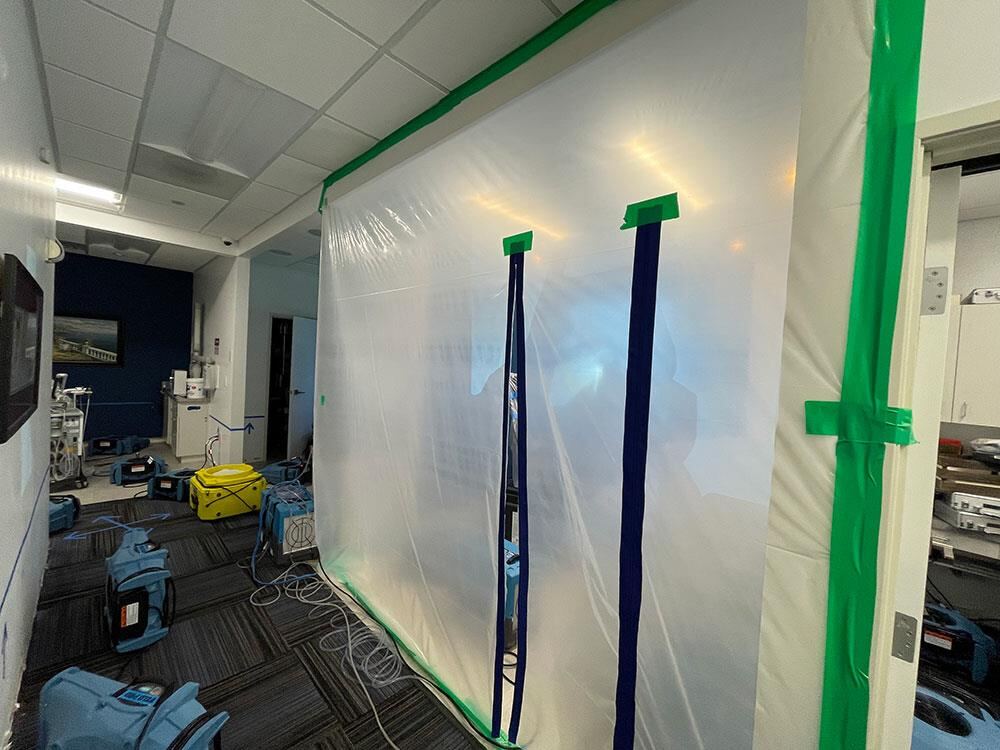
- Containment: the work area is sealed with polyethylene sheeting and zipper doors so spores can’t travel.
- Negative air: HEPA air scrubbers exhaust filtered air from the containment, keeping it at lower pressure than the rest of the house.
- Removal: contaminated porous materials (drywall, insulation, carpet) are removed and bagged; structural wood is cleaned by HEPA vacuuming, wire brushing or sanding.
- Cleaning and treatment: surfaces are damp-wiped, HEPA vacuumed again and treated with EPA-registered antimicrobials.
- Drying and moisture correction: the structure is dried and the source fixed — a pipe repair, roof repair or ventilation change.
- Verification: visual inspection and, if requested, post-remediation testing before containment comes down; then rebuild.
How much mold needs a professional?
The U.S. EPA suggests that homeowners can usually handle mold covering less than about 10 square feet (roughly a 3 × 3 ft patch) on non-porous surfaces, if they wear protection and fix the moisture. Call a professional when:
- The affected area is larger than 10 square feet or you suspect more hidden inside walls
- The mold followed sewage or contaminated flood water
- It is in the HVAC system or ductwork
- Someone in the household has asthma, allergies or a weakened immune system
- The property is being sold or rented and documentation is needed
Mold rules vary by location — New York State, for example, licenses mold assessors and remediators for larger projects. We follow the applicable local requirements for every job.
Mold remediation FAQ
Is black mold more dangerous than other mold?
Color doesn’t tell you the species or the risk. Any significant indoor mold growth should be removed properly, regardless of color.
Do I need mold testing?
If mold is visible, testing usually isn’t required to decide that it must be removed. Testing is useful when you smell mold but can’t find it, for health-related concerns, for real estate transactions and to verify results after remediation.
Does insurance cover mold removal?
Mold resulting from a covered, sudden water loss is often covered, sometimes up to a sublimit. Mold from long-term humidity or neglected leaks usually isn’t. Acting quickly after a leak protects your claim.
Can we stay home during mold remediation?
For small, contained projects, usually yes, as long as you stay out of the containment. For large projects or sensitive occupants we may recommend staying elsewhere during removal.