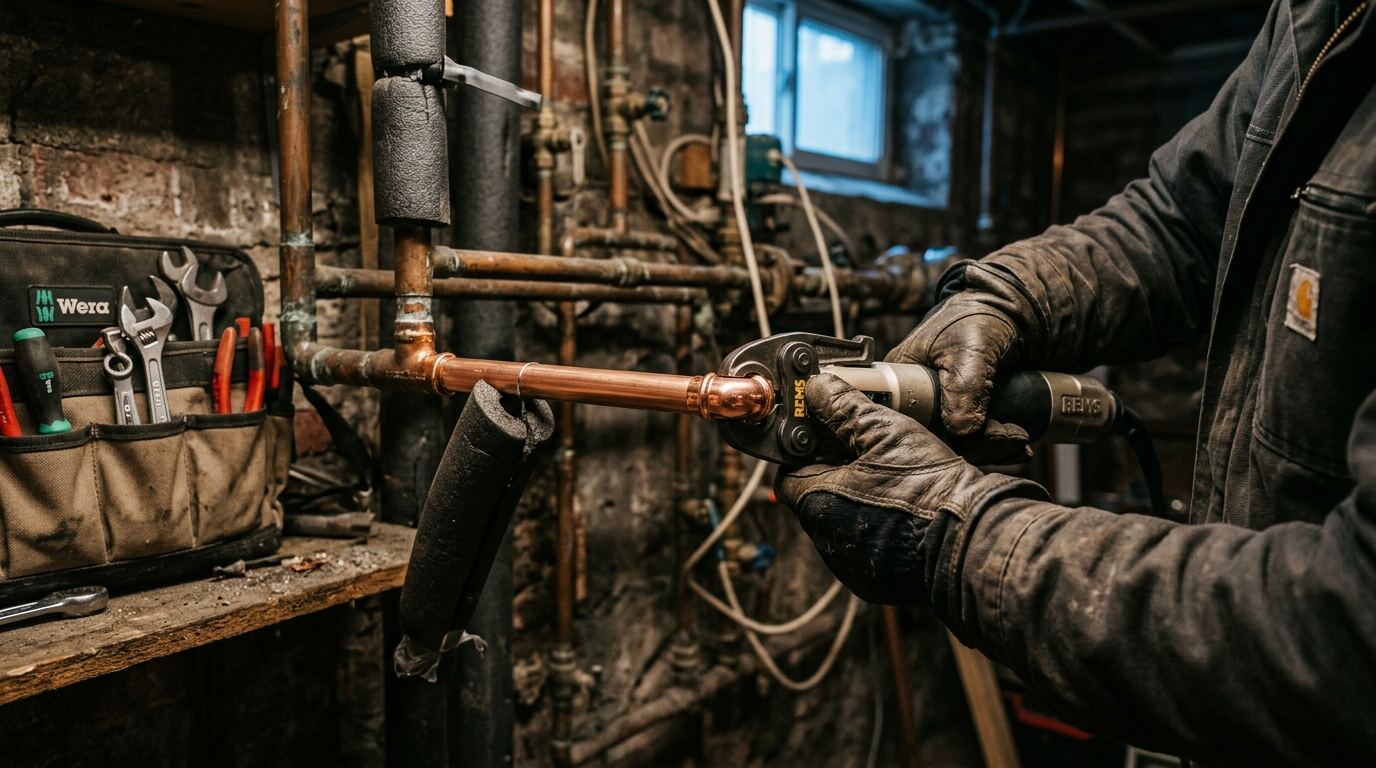
A plumber fixes the pipe and leaves; the wet wall behind it is someone else’s problem. We handle both — locate, repair, dry and rebuild — so nothing is left damp inside the structure. Work that requires a licensed plumber or a permit under local code is performed by appropriately licensed professionals.
Pipe problems we handle
- Supply line leaks: pinholes in copper, failed PEX crimp rings, corroded galvanized lines, leaking compression and threaded fittings
- Valves and fixtures: weeping shut-off valves, angle stops, hose bibs and shower valves
- Heating system leaks: baseboard hot-water loops, radiator valves and steam pipes common in New York homes and prewar buildings
- Water heaters: leaking relief valves, connections and tanks that have rusted through
- Appliance lines: washing machine hoses, dishwasher and refrigerator ice-maker lines
- Frozen and burst pipes: replacement of split sections after a freeze (see burst pipe emergency)
- Slab leaks: in Southern California, leaks in copper lines under the foundation, repaired by spot repair or rerouting (see slab leaks)
- Drain leaks: cracked traps, failing tub drains and leaking waste lines that stain the ceiling below
Signs you may have a hidden leak
- A water bill that jumped with no change in use, or a meter that moves with every fixture off
- Bubbling or peeling paint, soft drywall, or stains on a ceiling below a bathroom
- Musty odor in a cabinet or closet
- Cupping hardwood, loose tile or grout that stays dark
- A warm spot on the floor (a hot-water line leaking under the slab)
- The sound of running water when nothing is on
If you see any of these, leak detection comes first — opening walls at random wastes money.
How a pipe repair job runs
- Locate: moisture mapping, thermal imaging and, where needed, acoustic and pressure testing to find the leak with the smallest possible opening.
- Open and protect: the area is contained and contents protected before any wall or ceiling is opened.
- Repair: the failed section is repaired or replaced with materials matched to the existing system.
- Test: the line is pressure-tested and inspected for leaks.
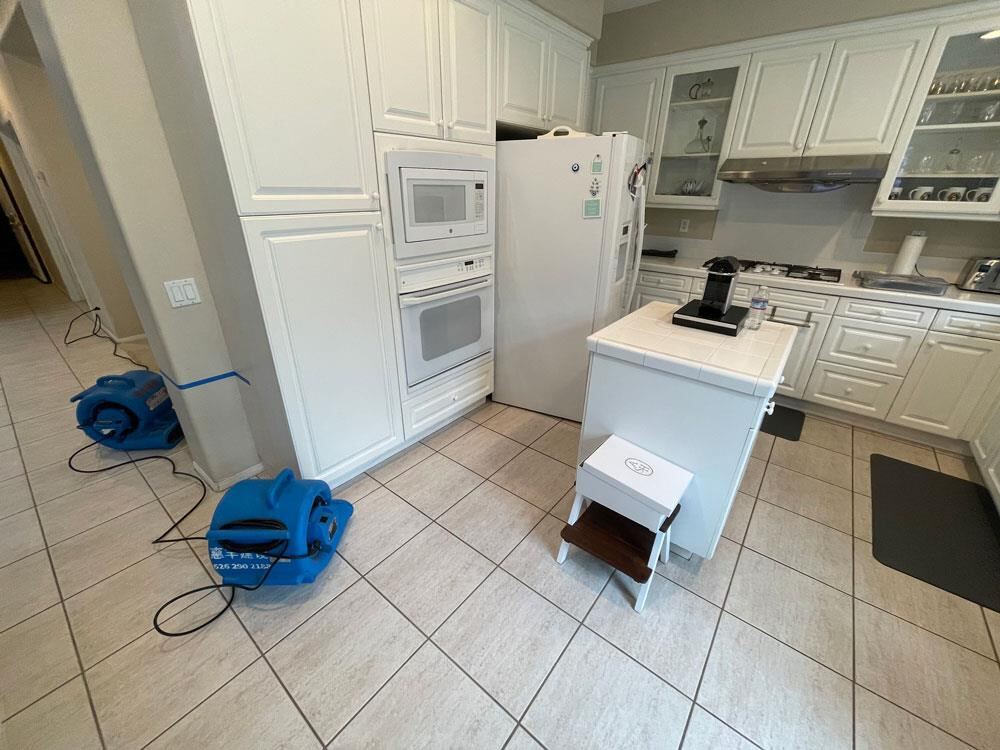
- Dry: wall cavities, subfloors and cabinets are dried and verified with meters.
- Close and finish: drywall, tile or flooring is restored and the job is documented for your records or insurer.
Common pipe materials and how they fail
| Material | Where you’ll find it | Typical failure |
|---|---|---|
| Copper | Most homes built after the 1950s, both coasts | Pinhole corrosion, especially with aggressive water; failed solder joints |
| Galvanized steel | Older New York homes and buildings | Internal rust, low pressure, leaks at threads |
| PEX | Newer construction and repipes | Fitting and crimp failures, rodent damage |
| CPVC / PVC | Some supply systems and most drains | Brittleness with age, cracked fittings |
| Cast iron | Drain and waste stacks in older homes | Cracks and corrosion along the bottom of the pipe |
Does insurance pay for pipe repair?
Most homeowners policies cover the water damage from a sudden leak, including the cost of opening and closing walls to reach it, but not the repair of the pipe itself when it failed from wear and tear. Gradual leaks that went on for weeks are frequently denied. We document the cause and the timeline so the claim is evaluated on the facts.
Pipe leak repair FAQ
Should I repair just the leak or repipe the house?
One leak is usually repaired. Repeated pinhole leaks in copper or widespread galvanized corrosion are signs the system is at the end of its life; we’ll show you what we find and let you decide.
How big a hole will you cut in my wall?
As small as the diagnosis allows. Good detection often means a single access panel rather than a demolished wall.
Can you match my tile after opening a shower wall?
We try to access from the back side of the wall first. If tile must be removed, we salvage what we can and help you source a match or a design-coordinated replacement.