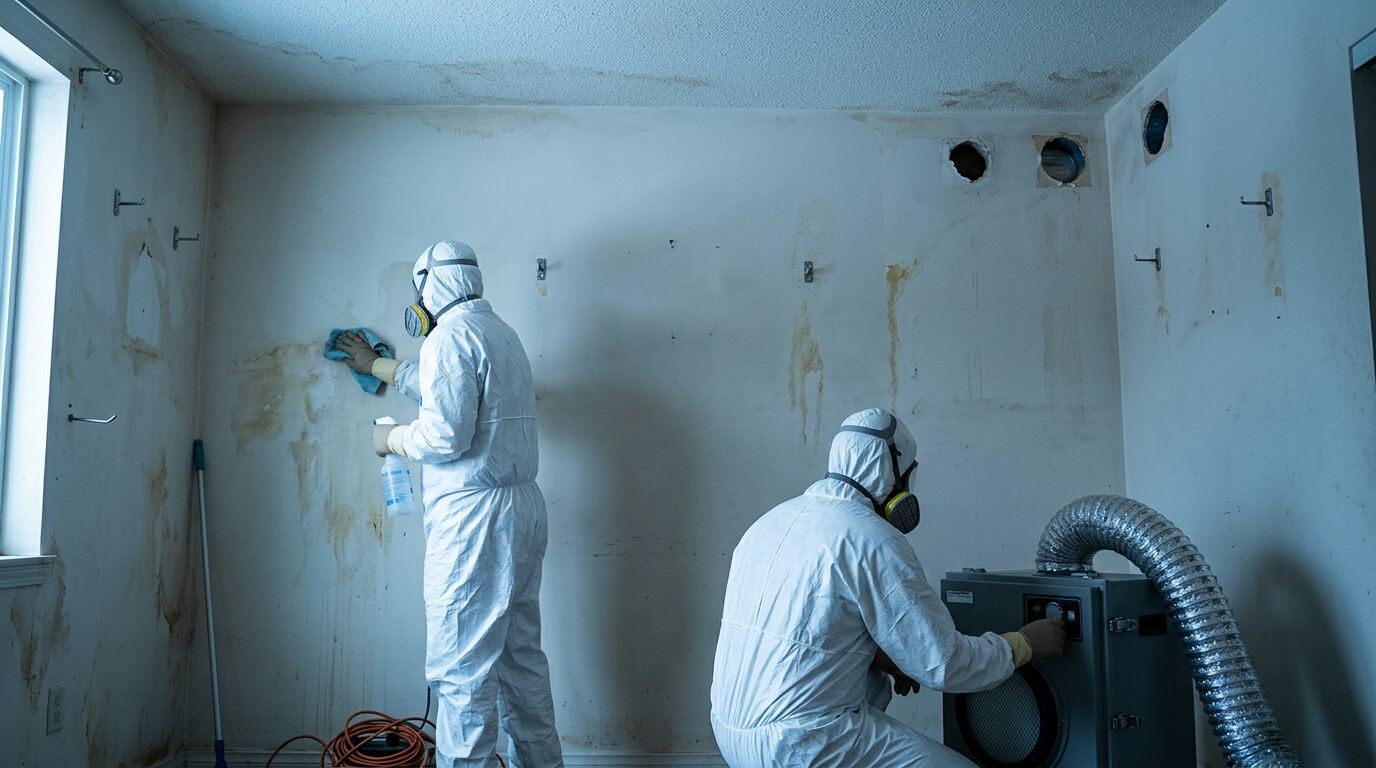
Landlords recovering a rental, banks and asset managers with foreclosed or bank-owned homes, property managers, investors, and buyers who discovered the history after closing. We work discreetly and document every step.
What an indoor grow leaves behind
- Moisture damage and mold: growing rooms run at high relative humidity for months, saturating drywall, insulation, subfloor and framing
- Chemical residue: fertilizers, pesticides, fungicides and growth regulators on surfaces and in carpet
- Odor: terpenes and smoke absorbed into every porous surface and the HVAC system
- Structural alterations: holes cut in walls, ceilings and foundations for ducting and fans
- Electrical tampering: bypassed meters and overloaded circuits that must be inspected by a licensed electrician
- Debris: soil, containers, reflective sheeting and equipment
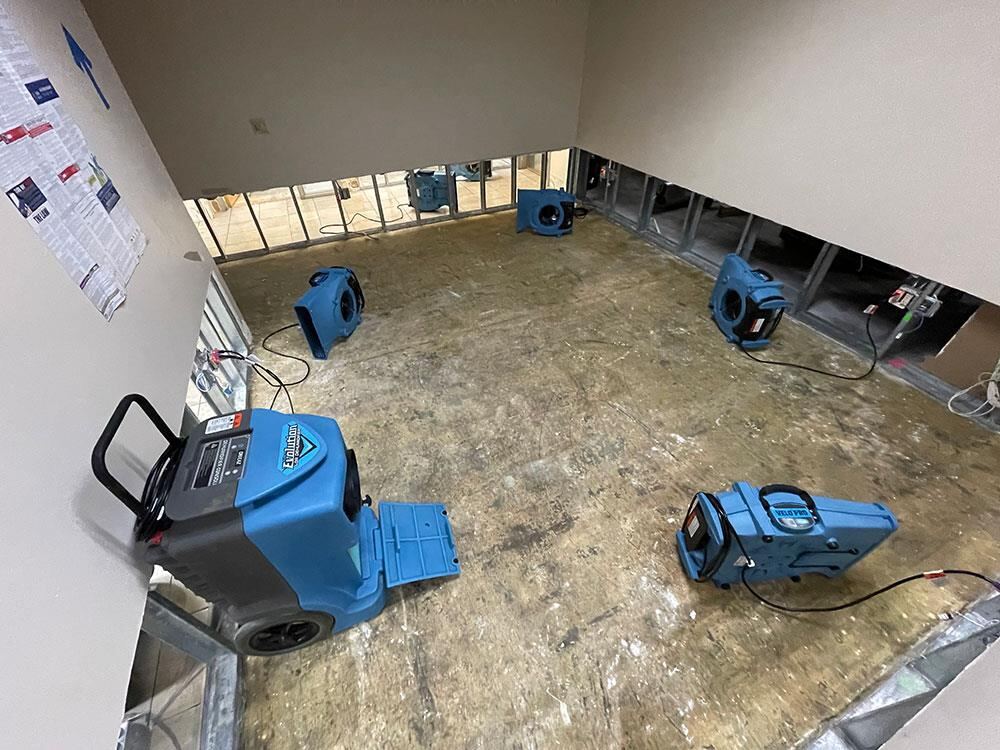
Our remediation process
- Assessment: walk-through, moisture mapping and photo documentation of affected rooms, HVAC and attic.
- Safety coordination: utilities and electrical are checked by licensed professionals before work begins.
- Debris and equipment removal: all remaining grow materials are removed.
- Containment and demolition: contaminated drywall, insulation, carpet and moldy framing are removed under containment with HEPA air filtration.
- Deep cleaning: HEPA vacuuming and detergent cleaning of framing, floors and all surfaces to remove chemical residue.
- Mold and odor treatment: antimicrobial application, drying, odor removal and sealing of framing.
- HVAC cleaning: duct cleaning or replacement where odor and residue have settled.
- Verification and rebuild: moisture readings and, if required, third-party clearance testing before new drywall, flooring and finishes go in.
Grow house remediation FAQ
Does a former grow house have to be gutted?
Not always. It depends on how long the grow operated, how many rooms were used and how far moisture and mold spread. Some homes need only targeted removal and cleaning; others need to be taken down to the framing. The assessment tells us which.
Will I need to disclose the history when selling?
Disclosure rules vary by state. We don’t give legal advice, but we provide full documentation of the work completed, which buyers, lenders and attorneys typically ask for.
Is remediation covered by landlord insurance?
It depends on the policy and on whether the damage is considered sudden or the result of illegal activity. Some landlord policies cover tenant damage; many exclude it. We document the loss so your carrier can review it.