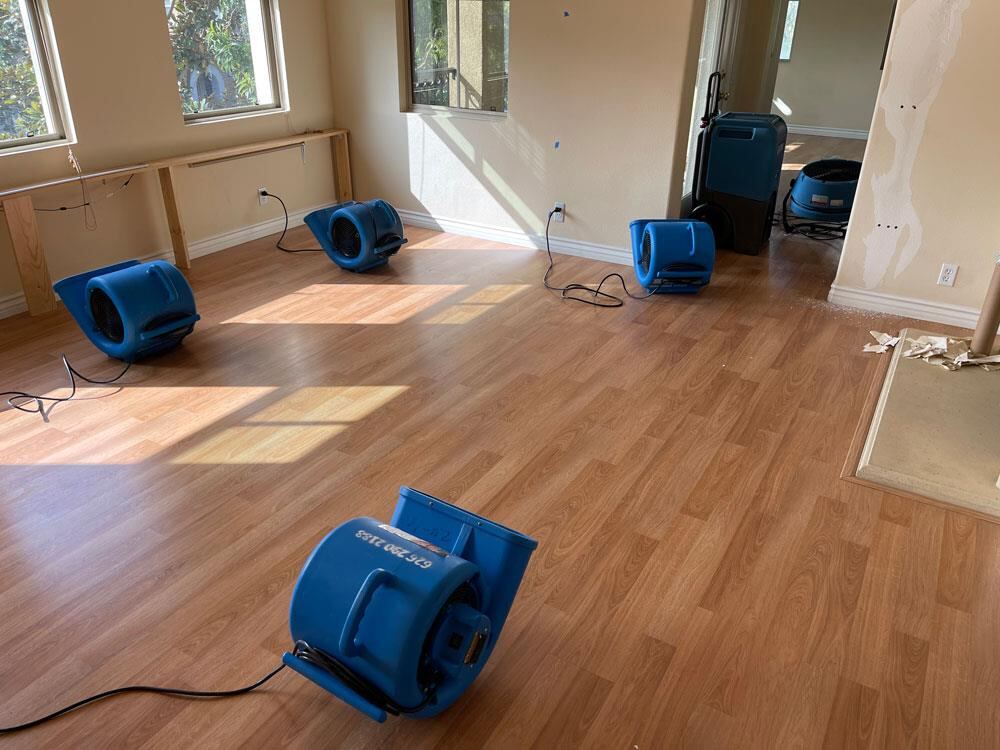
Carpet, drywall and wood flooring are porous. Wiping the surface dry leaves moisture inside, and within 24 to 48 hours that moisture can start feeding mold and bacteria that cause cupped floors, bubbling paint and odors. Professional water damage restoration maps the wet area with instruments, brings materials back to normal moisture content with commercial equipment and leaves a written moisture log your insurer can use.
The most common sources of water damage we see
Water in the house turns life upside down, and most people don’t know who to call, how to get the water out or how to dry the structure. You need a trusted specialist on site quickly to inspect the entire property — including the attic, basement and crawl space. The sources we handle most often in New York and Southern California:
- Supply lines and fittings: pinhole leaks in older copper, loosened PEX fittings, frozen pipes in exterior walls and garages (see burst pipe emergency)
- Appliances: burst washing machine hoses, dishwasher and ice-maker line leaks, rusted-through water heaters
- Upstairs units: tub overflows, failed shower pans and riser leaks in co-ops, condos and two-family homes
- Roofs and exterior walls: damaged shingles or tile, failed flashing, ice dams, window seals (see roof leak repair)
- Basements: storm water intrusion, sump pump failure, foundation cracks (see flood cleanup)
- Under the slab: in Southern California, leaks in copper lines beneath the concrete foundation (see slab leaks)
Why “wiping it up” is never enough
When water ends up where it shouldn’t, simple drying methods usually fall short. Carpet, walls and floor coverings are porous and need thorough water damage cleaning, not ordinary housekeeping. Surface cleaning removes what you can see, but many microorganisms remain inside the materials and can cause health problems and persistent odors.
Every surface affected by water damage should be thoroughly cleaned, sanitized and deodorized by trained professionals to remove the bacteria, fungi and viruses that make a space unhealthy to live in.
How Blue Arrow restores water damage
- Stop the loss and make it safe: confirm the water source is off and the electrical supply to affected areas is safe; if needed, our pipe repair team fixes the leak first.
- Inspect and map: thermal imaging, pin and pinless moisture meters locate wet areas inside walls, ceilings and under floors; we determine the category of water and class of loss and photograph everything.
- Extract: submersible pumps remove standing water and portable extractors pull water from carpet and pad, cutting drying time dramatically.
- Move out and tear out: contents are cleaned or moved; what cannot be saved is removed. When necessary we remove wet baseboards, lower drywall (a “flood cut”) or pad so wall cavities can breathe.
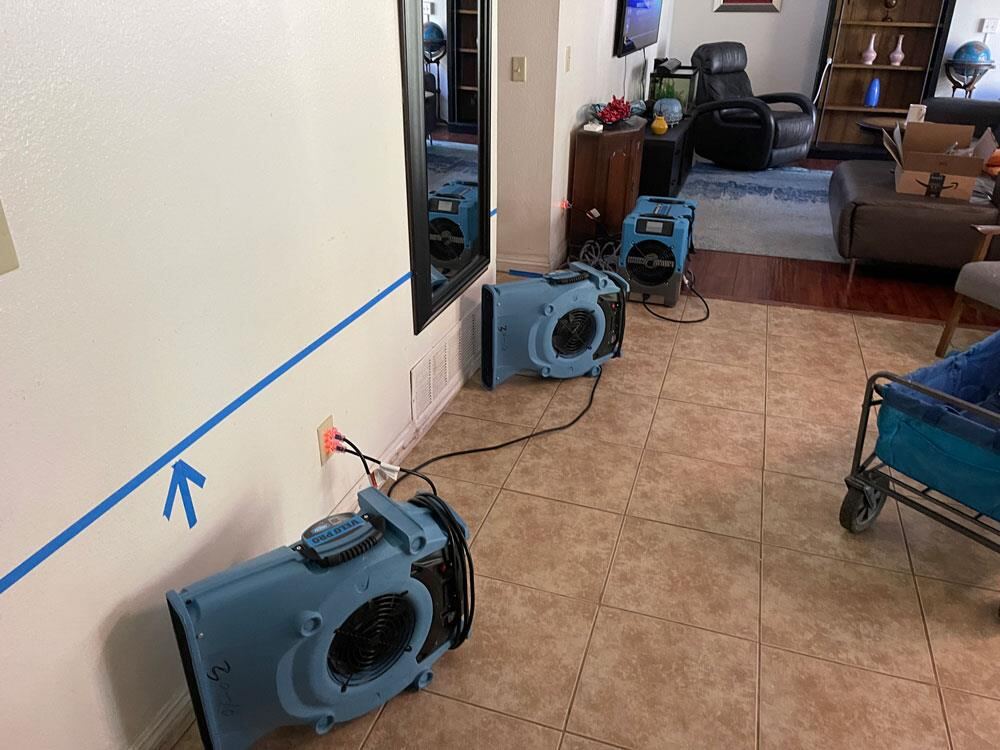
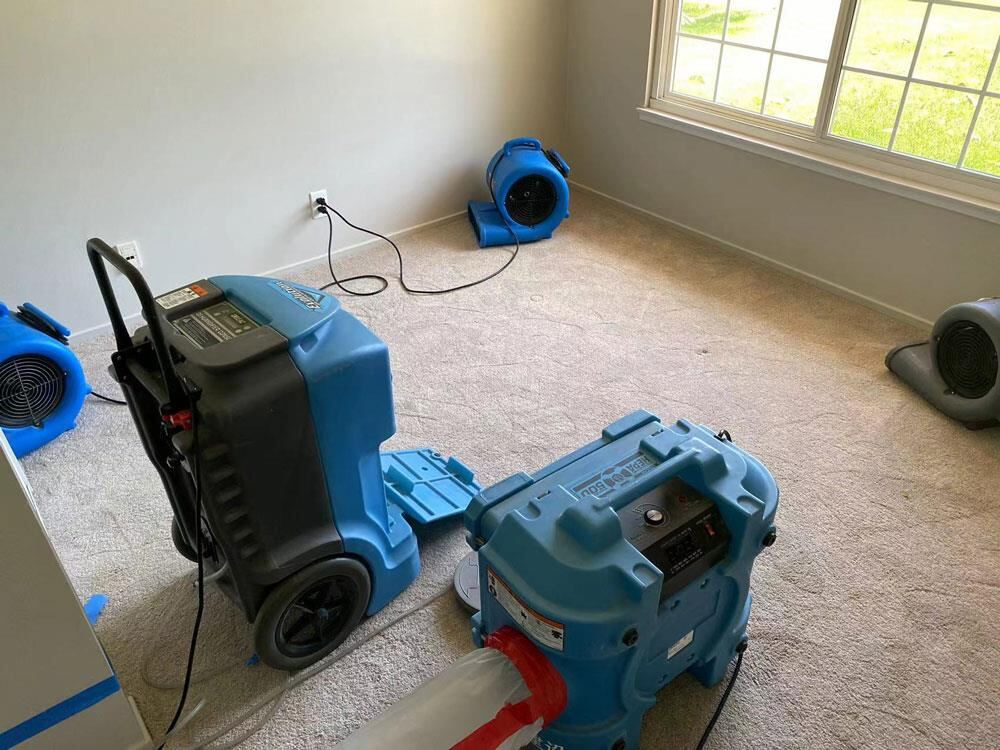
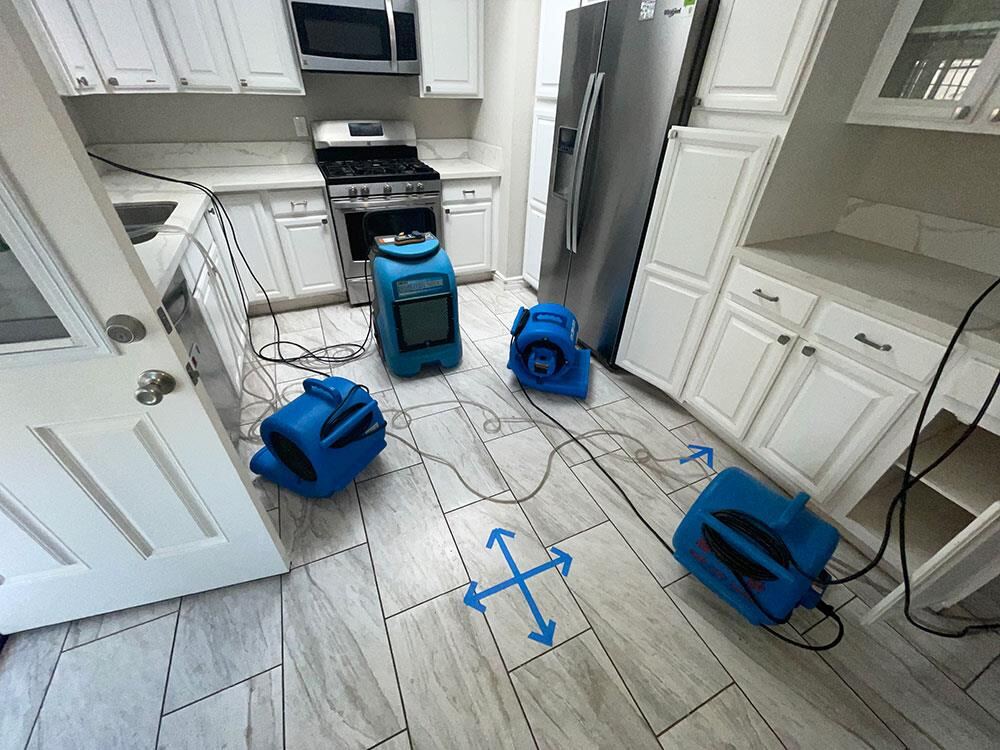
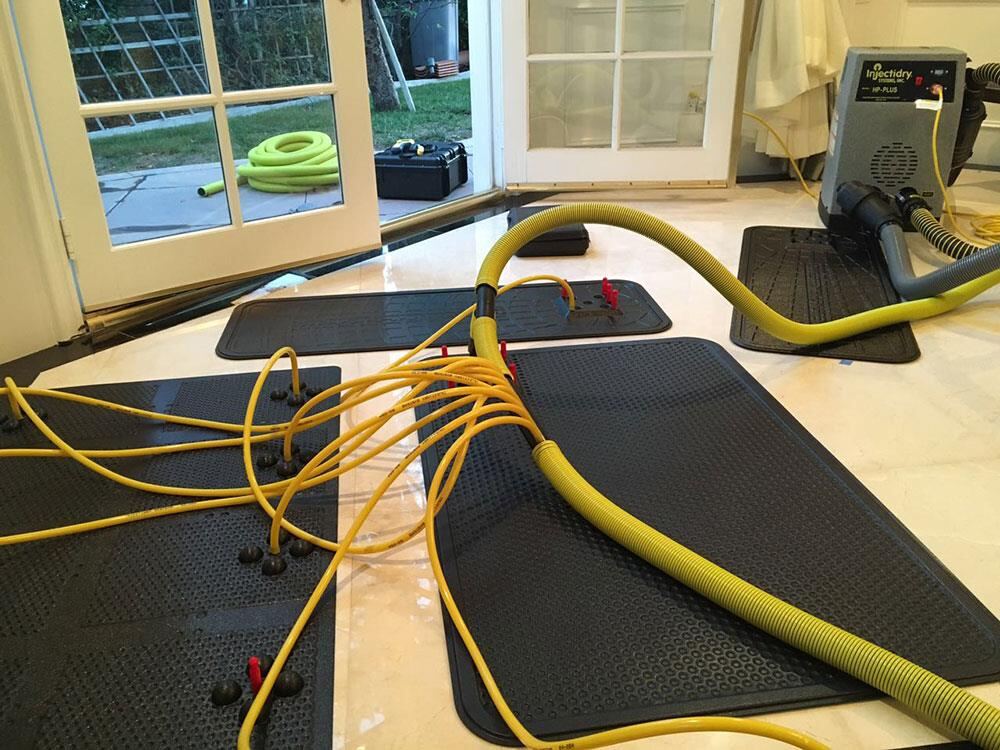
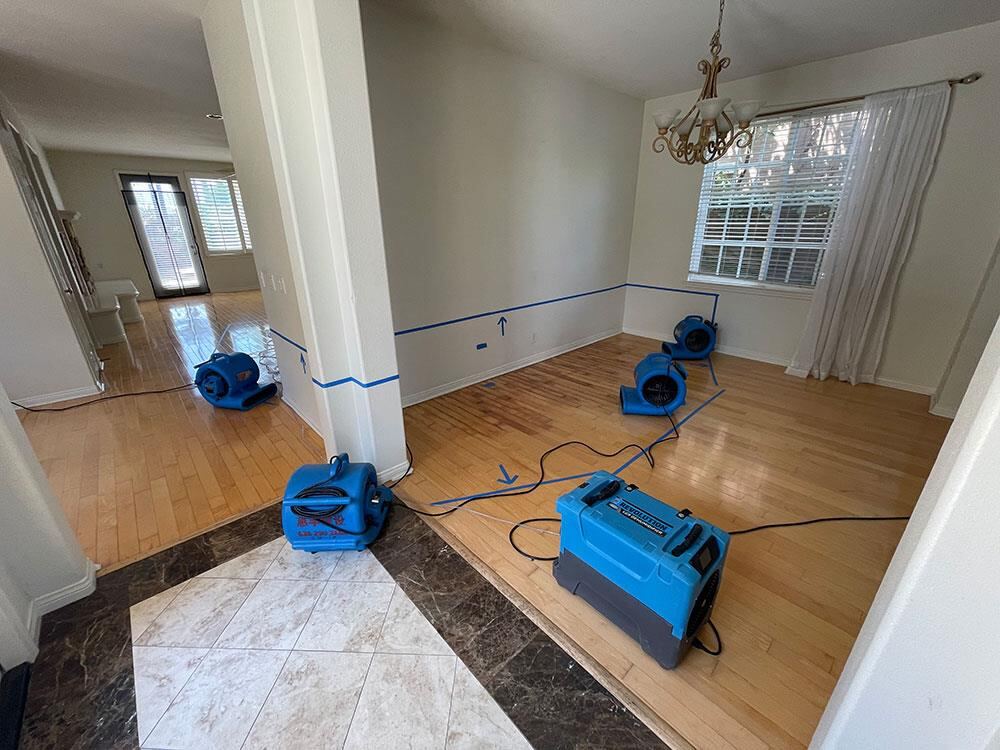
- Structural drying: air movers accelerate evaporation while low-grain refrigerant dehumidifiers pull moisture out of the air; hardwood floor mat systems draw water from beneath the boards so floors, walls and cabinetry don’t swell.
- Clean, disinfect and deodorize: EPA-registered antimicrobials and deodorizers are applied and HEPA air scrubbers clean the air.
- Monitor daily and verify: temperature, humidity and material moisture content are logged every day. Our equipment stays in your home or business until readings confirm every affected area has reached its dry standard.
The category of water determines the method
The IICRC S500 standard groups water losses into three categories by contamination level. The higher the category, the fewer materials can be saved and the stricter the protection and disinfection requirements. Full explanation: water damage categories and classes.
| Category | Typical sources | What it means |
|---|---|---|
| Category 1 — clean water | Broken supply line, overflowing sink, ice-maker line | Extract and dry fast; most materials can be saved |
| Category 2 — gray water | Washing machine or dishwasher discharge, tub overflow | Antimicrobial treatment; carpet pad usually replaced |
| Category 3 — black water | Sewer backup, toilet waste, rising flood water | Handled as a biohazard; porous materials removed; see sewage cleanup |
Note that clean water left standing for more than 48 hours, or that contacts contaminants, is reclassified to a higher category — one more reason to act quickly.
How long does drying take?
Most residential clean-water losses reach their dry standard in about three to five days after equipment is set. Concrete, solid hardwood, multi-layer walls and materials that were wet for a long time can take longer. We go by daily readings, not by a set number of days.
Insurance and cost
Sudden and accidental water damage — a pipe that bursts, a water heater that suddenly fails — is generally covered by homeowners policies, while long-term seepage and wear and tear are commonly excluded. Blue Arrow bills your insurance carrier directly to take that pressure off you when it matters most. Learn more in Does insurance cover water damage? and insurance claim help.
Water damage FAQ
My upstairs neighbor’s leak damaged my unit. Who handles it?
First have the neighbor or building management stop the water, and photograph the leak location with the time. Damage is typically handled by the responsible party’s insurance or your own policy, with carriers settling between themselves. We can start mitigation right away and provide documentation for both insurers.
Can water-soaked hardwood floors be saved?
With clean water and a fast response, many solid and engineered hardwood floors can be saved using floor drying mats and dehumidification. Severe cupping, delamination or gray and black water usually mean replacement. The sooner drying begins, the better the odds.
Will you have to cut open my walls?
Not always. Clean water in drywall can often be dried by drilling small holes and forcing air into the cavity. Tear-out of the lower drywall is needed when insulation is saturated, mold has started or the water was contaminated.
Can we stay at home while the equipment runs?
With clean-water losses most families stay home; expect fan noise and slightly warmer rooms. For sewage, mold or jobs that require containment we’ll advise you to stay out of the work area.