Steps 1–3: Get safe and stop the water
Step 1: Make sure it’s safe
If water has reached outlets, appliances, extension cords or the electrical panel, or a ceiling is visibly sagging, don’t walk into the wet area. If you smell gas, see sparks or notice structural cracking, leave and call 911.
Step 2: Shut off the water
For a pipe, water heater or washing machine leak, close the fixture’s own valve. If you can’t find it or it won’t close, shut the main: in most New York houses it’s on the front basement wall by the meter; in Southern California it’s often outside near the front hose bib or at the curb. In an apartment, call the super. Then open the lowest faucet to relieve the pressure.
Step 3: Cut power to affected areas
Switch off the breakers for the wet areas while standing somewhere dry. If you’re not sure which breaker controls what, and the area around the panel is dry, shut off the main.
Steps 4–6: Document and save what you can
Step 4: Photograph and video everything
Before cleaning up, capture: the source (the split pipe, the leaking water heater), how far the water spread and how deep it is, damaged walls, ceilings and floors, and damaged furniture and appliances with their model plates. Say the date and time on the video. This is the most important evidence for your claim.
Step 5: Move and lift belongings
- Move electronics, documents and photos to a dry floor
- Put foil or plastic blocks under furniture legs so wood doesn’t wick water and rugs don’t stain
- Lift carpet corners and pull out anything stored underneath
- Carry soaked fabrics and cardboard out — but don’t throw them away until they are photographed and listed
Step 6: Remove surface water
Once the electrical situation is safe, mop, towel or use a wet/dry vac on standing water. Never use a regular household vacuum. If the water came up from a toilet or floor drain, don’t clean it yourself — see sewage cleanup.
Steps 7–9: Call the right people
Step 7: Notify your landlord, building or neighbors
In apartments, two-family homes and rentals, leaks usually involve the units above and below and the owner. Tell everyone involved promptly and note the time.
Step 8: Report the claim to your insurer
Find your policy number, call your carrier or agent and write down the claim number and the adjuster’s contact details. Policies require you to take reasonable steps to prevent further damage, so you don’t have to wait for the adjuster to start mitigation. Wondering if you’re covered? Read Does insurance cover water damage?
Step 9: Get a professional to measure and dry
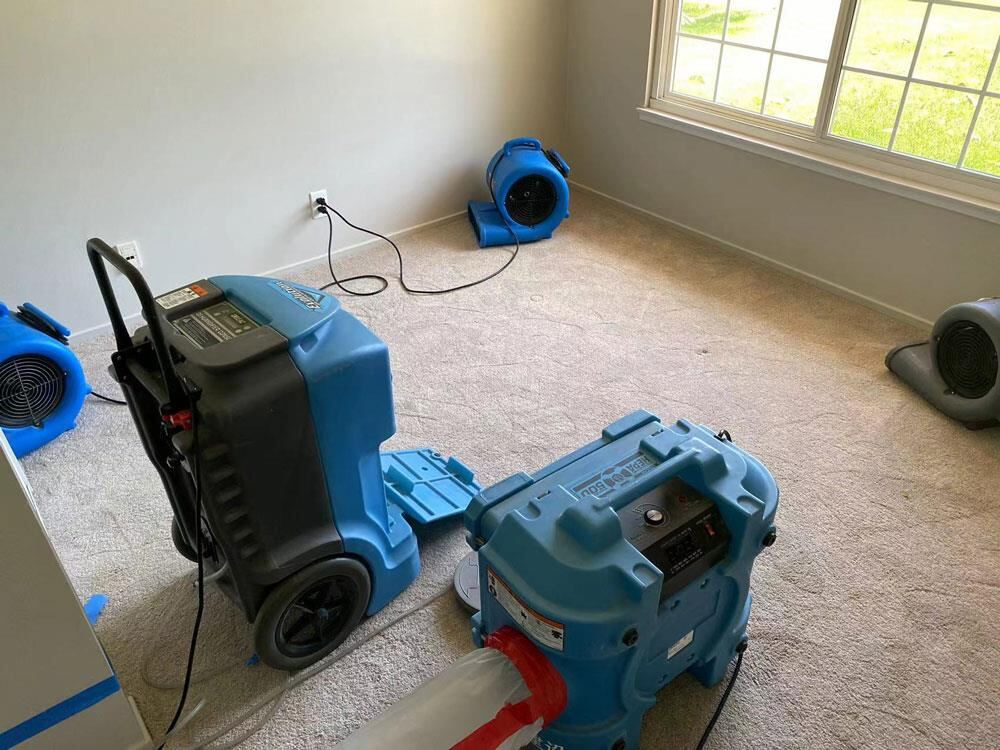
A restoration crew uses moisture meters and thermal imaging to find wet areas you can’t see, sets commercial drying equipment, applies antimicrobials and logs readings every day until everything is dry. Blue Arrow answers 24/7: New York (917) 915-6118, Los Angeles (855) 662-6753.
5 mistakes that make damage worse
- Drying only the surface and putting carpet and furniture right back
- Turning on ceiling lights under a wet ceiling, or standing under a bulge
- Blasting walls for hours with space heaters or hair dryers, which cracks wood and pushes moisture elsewhere
- Throwing away damaged items before photographing them
- Assuming “it doesn’t smell, so it’s fine” — and finding mold in the wall weeks later
The timeline: why speed matters
| Time | What can happen |
|---|---|
| Minutes | Water spreads across floors, into subfloors and walls; paper and fabric absorb it; rugs bleed dye |
| Hours | Drywall softens at the base, furniture legs swell, odors begin |
| 24–48 hours | Mold can begin to grow, hardwood starts to cup, clean water can degrade to gray water |
| Days to a week | Mold spreads, framing and door casings warp, much more material has to be removed |
| More than a week | Structural and health risks rise, and insurers may question whether the loss was mitigated in time |
The best preparation happens before anything goes wrong: know where your main shut-off is, where your policy number is kept, and save our number — (917) 915-6118 in New York, (855) 662-6753 in California — in your contacts.
FAQ
The leak stopped and it looks dry. Do I still need an inspection?
We recommend at least one moisture check. Water trapped in drywall, subfloor and insulation isn’t visible, yet it’s enough to start mold within weeks. A documented “dry” reading is also useful if you sell or file a claim later.
Can I dry it myself and report it to insurance later?
You can and should mitigate right away, but report the loss promptly; many policies require timely notice. Late reporting and missing evidence after DIY cleanup can hurt your claim.