What a slab leak is
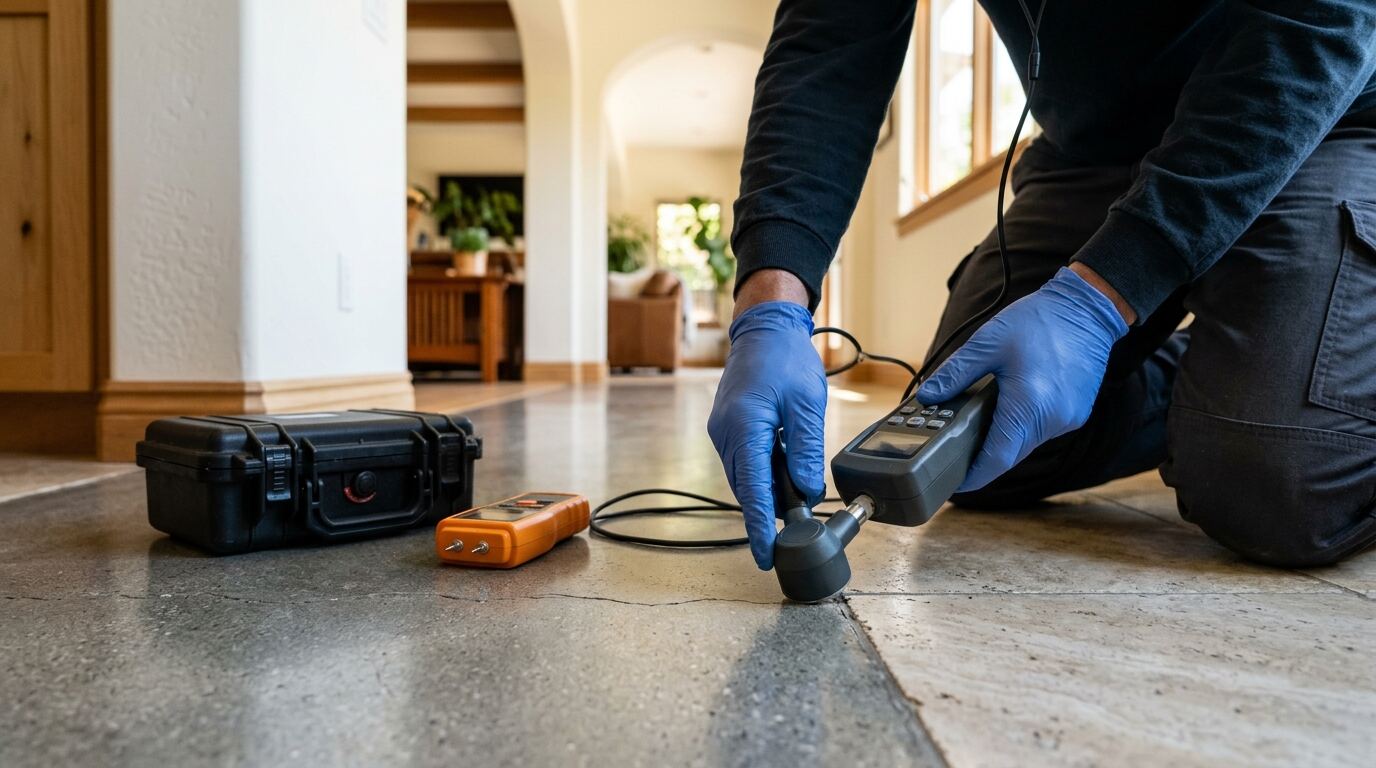
A slab leak is a leak in a water line that runs beneath or inside a home’s concrete foundation. Hot-water lines are the most common culprits because heat expansion and higher flow speed wear copper faster. Water may pool under the slab, wick up into flooring and walls, or find its way outside.
Warning signs
- A warm or hot spot on the floor, often felt through tile or by pets lying on it
- The sound of running water when every fixture is off
- A water meter that moves with all water turned off
- A water bill noticeably higher than usual
- Damp or cupping flooring, loose tile, or carpet that stays wet
- New cracks in tile or the slab, or musty odors at floor level
- A water heater that runs constantly
Why slab leaks happen
- Hard water and water chemistry that gradually corrode copper from the inside
- Abrasion where pipes rub against concrete, gravel or each other as they expand and contract
- Soil movement from expansive clay soils and seismic activity
- Age and installation — homes from the 1960s through the 1990s with original copper
- High water pressure without a working pressure regulator
How a slab leak is located
- Meter and isolation tests confirm a supply leak and whether it’s on the hot or cold side.
- Pressure testing of individual lines narrows it down.
- Acoustic detection listens for the sound of water escaping through the slab.
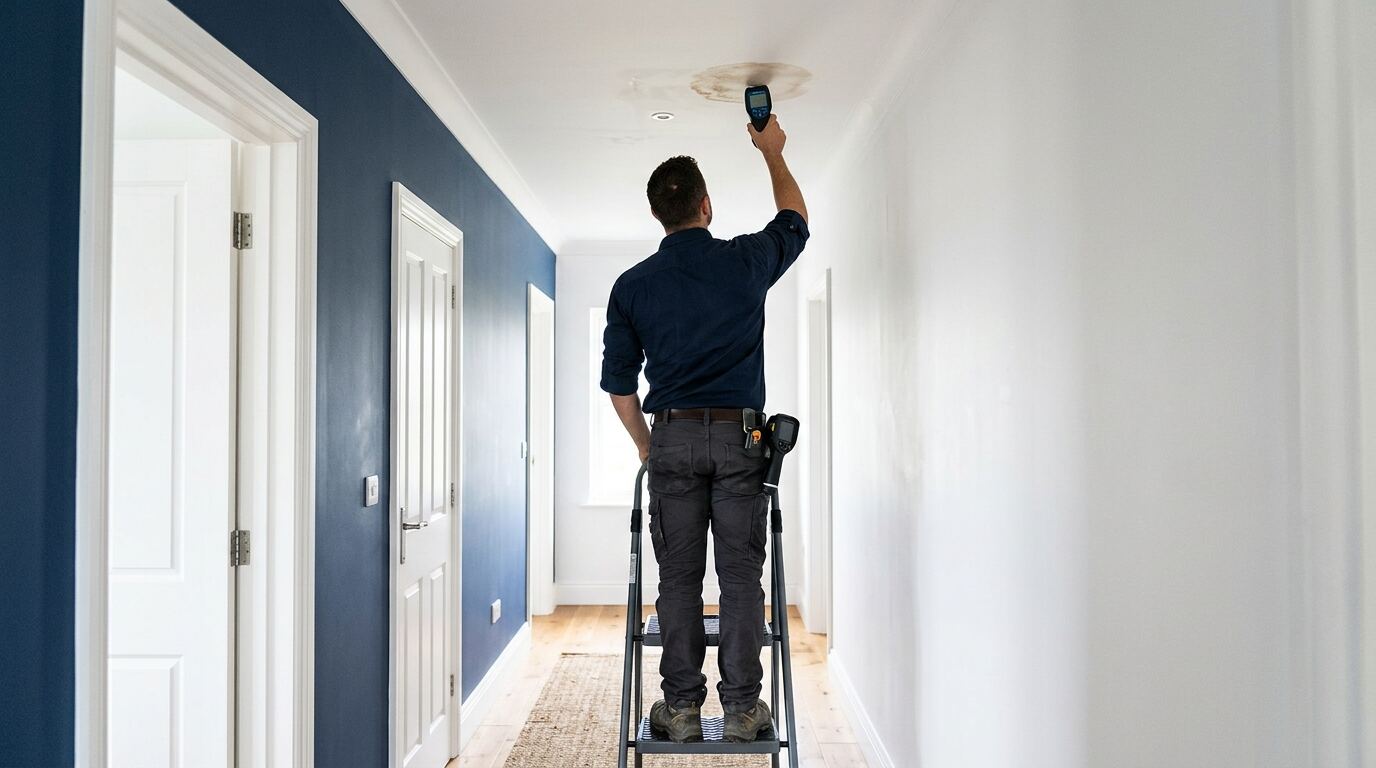
- Thermal imaging shows the heat signature of a hot-water leak through flooring.
- Moisture mapping shows how far water has spread into floors and walls.
Good detection means breaking concrete in one small spot instead of trenching through a room. See leak detection.
Repair options
| Option | How it works | When it fits |
|---|---|---|
| Spot repair | Open the slab at the leak, repair the pipe, patch the concrete | A single leak in otherwise healthy pipe |
| Reroute | Abandon the leaking line and run a new one through walls or the attic | A problem line, or a leak under hard-to-reach areas |
| Repipe | Replace most or all of the supply lines in the house | Repeated leaks and widespread corrosion |
Whichever option is chosen, wet flooring, drywall and cabinetry need to be dried and checked for mold. We handle the leak and the water damage together. Plumbing work is performed by appropriately licensed professionals under local code.
What insurance covers
Many California homeowners policies cover the resulting water damage from a sudden slab leak and the cost of accessing the leak (breaking and restoring the slab or flooring). The pipe repair itself is often excluded, and damage from a leak that went on for a long time may be denied. Some policies offer a specific slab leak or “service line” endorsement. Document the leak as soon as you find it. See Does insurance cover water damage?
FAQ
Can I keep using water with a slab leak?
If the leak is on the hot side, shutting off the water heater’s cold supply can slow it while you arrange repairs. For cold-side leaks or heavy loss, shut the main and call us.
How long does a slab leak repair take?
Detection and a spot repair can often be done in a day; drying typically takes three to five more days. Reroutes and repipes take longer.