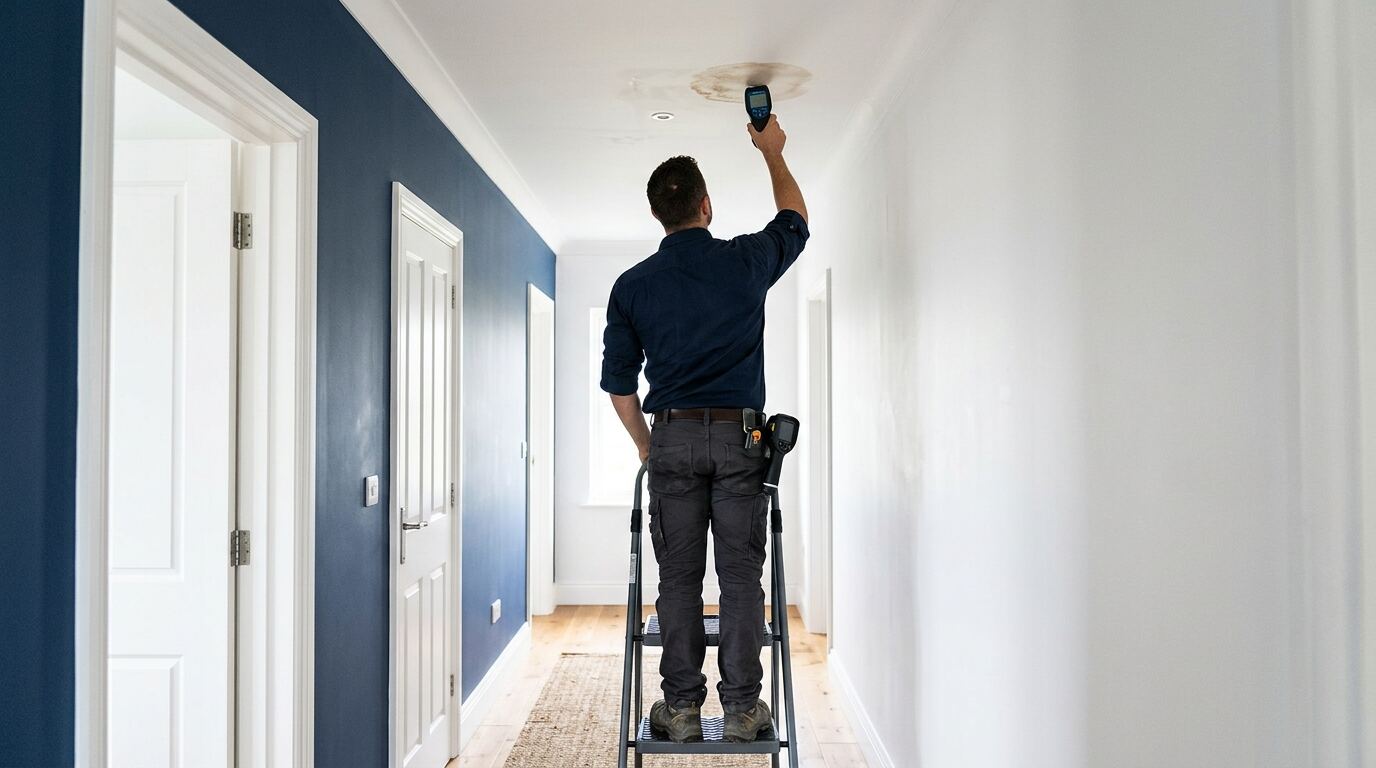
When you need leak detection
- Your water meter moves with every fixture and appliance turned off
- A stain or soft spot appears on a ceiling, wall or floor and you can’t see where it’s coming from
- You hear water running inside a wall
- A section of floor feels warm underfoot — a classic sign of a hot-water slab leak
- A musty smell persists after cleaning
- Your insurer or a buyer’s inspector wants to know whether a past leak is still active
The tools we use
| Tool | What it does |
|---|---|
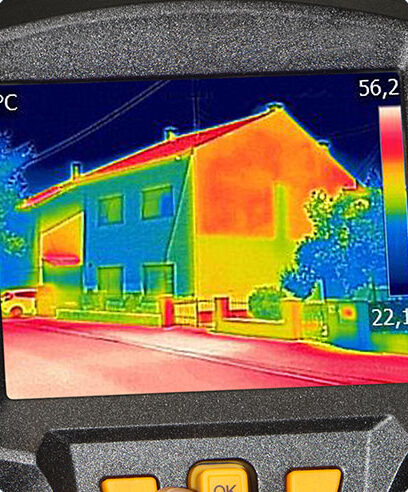
| Thermal imaging camera | Shows temperature differences on surfaces; evaporating moisture reads cooler and reveals wet areas behind drywall, ceilings and floors |
| Pinless (non-invasive) moisture meter | Scans large areas through drywall, tile and wood without damage to outline the wet zone |
| Pin moisture meter | Measures the exact moisture content of wood and drywall at specific points |
| Thermo-hygrometer | Measures air temperature and relative humidity to calculate drying conditions |
| Acoustic leak detector | Amplifies the sound of water escaping under pressure, used to pinpoint slab and buried line leaks |
| Pressure testing | Isolates sections of the plumbing to confirm which line is losing pressure |
Our process and report
- Interview and history: when the problem started, when it gets worse, recent work on the house.
- Meter check: a meter test with all fixtures off confirms whether a supply-side leak exists.
- Scan and map: thermal imaging and pinless meters outline the affected zone; pin readings confirm it.
- Isolate: pressure and acoustic testing narrow it down to a specific line or fixture.
- Report: you receive photos, thermal images, moisture readings and our findings, with recommended next steps — repair, drying or both.
Common hidden leak sources
- Shower pans and failed grout or caulk around tubs
- Toilet wax rings and supply lines
- Dishwasher and refrigerator lines behind cabinets
- Hot-water lines under a concrete slab
- Condensate lines from air handlers and air conditioners in attics
- Window and door flashing, and roof penetrations
Leak detection FAQ
Can thermal imaging see through walls?
No — it reads surface temperatures. Moisture changes those temperatures, which is why a thermal camera is so useful for finding where to look. We always confirm with a moisture meter before drawing conclusions.
Will you have to break anything?
Detection itself is non-invasive. Pin meters leave tiny holes. Opening a wall or floor only happens once the location is confirmed and you’ve approved it.
Is leak detection covered by insurance?
Many policies include the cost of locating the source of a covered water loss (sometimes called “tear-out” or access coverage). Check your policy or ask your adjuster; we provide a report either way.