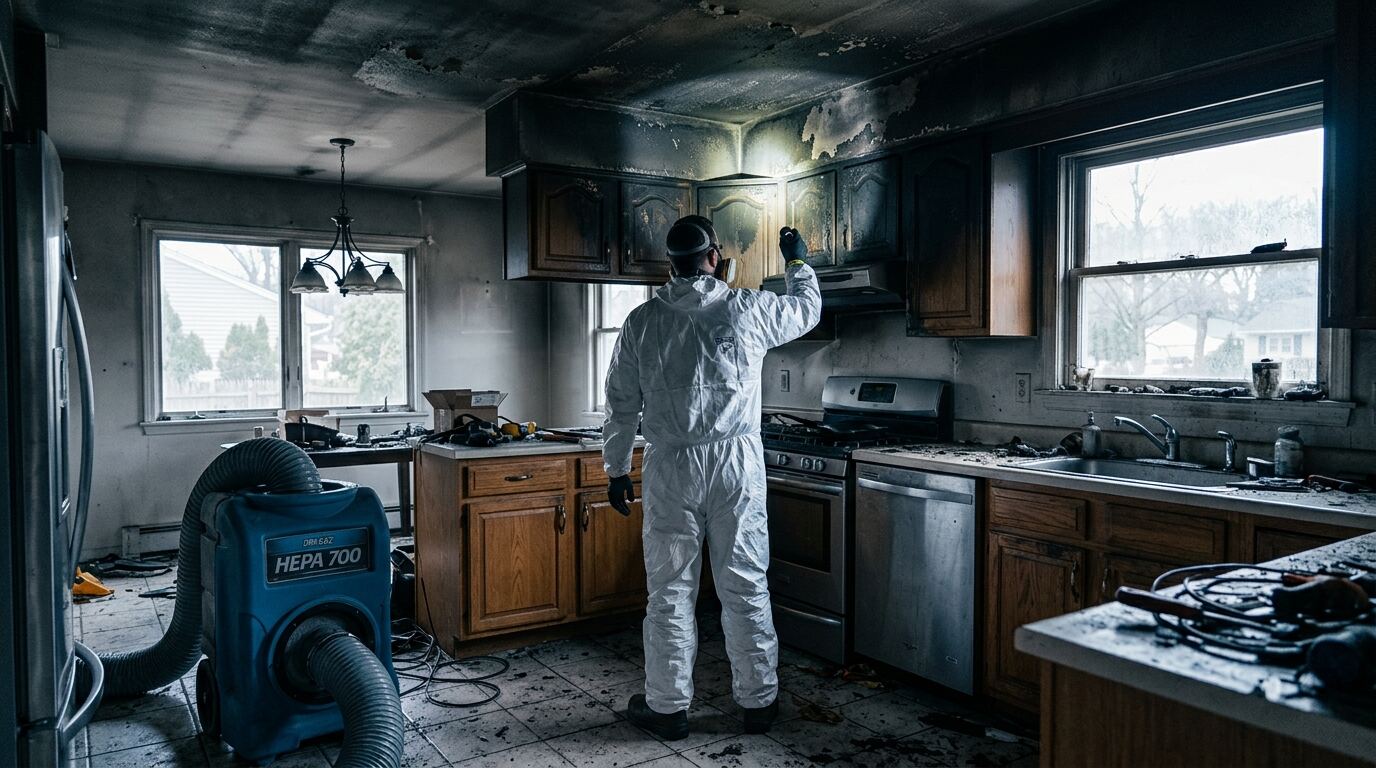
As soon as the fire department clears you to enter. Acidic soot can yellow plastics, corrode metal and permanently stain walls and stone within hours to days, and the water used to fight the fire can start growing mold within 24 to 48 hours.
Smoke: the fire is out, the damage isn’t
Smoke is a mixture of harmful particles and gases. Inhaled, it inflames the lungs and airways and interferes with oxygen uptake. Even after the fire is extinguished, residue left on walls, carpet and furniture continues to release fine particles that can travel deep into the lungs; smoke also contains carbon monoxide, carbon dioxide and soot.
Smoke migrates toward cooler surfaces. That’s why the residue behind blinds and curtains is often heavier than in the room where the fire started, and why rooms that never saw a flame can still be smoke-damaged.
Smoke residue
Particles and gases settle into walls, carpet, furniture and HVAC ducts and keep off-gassing.
Lung disease
Children and adults with asthma risk lasting lung damage; soot and mold are especially dangerous for people with emphysema.
Eye irritation
Watering, itching and redness after re-entering a burned home are caused by lingering soot and smoke residue.
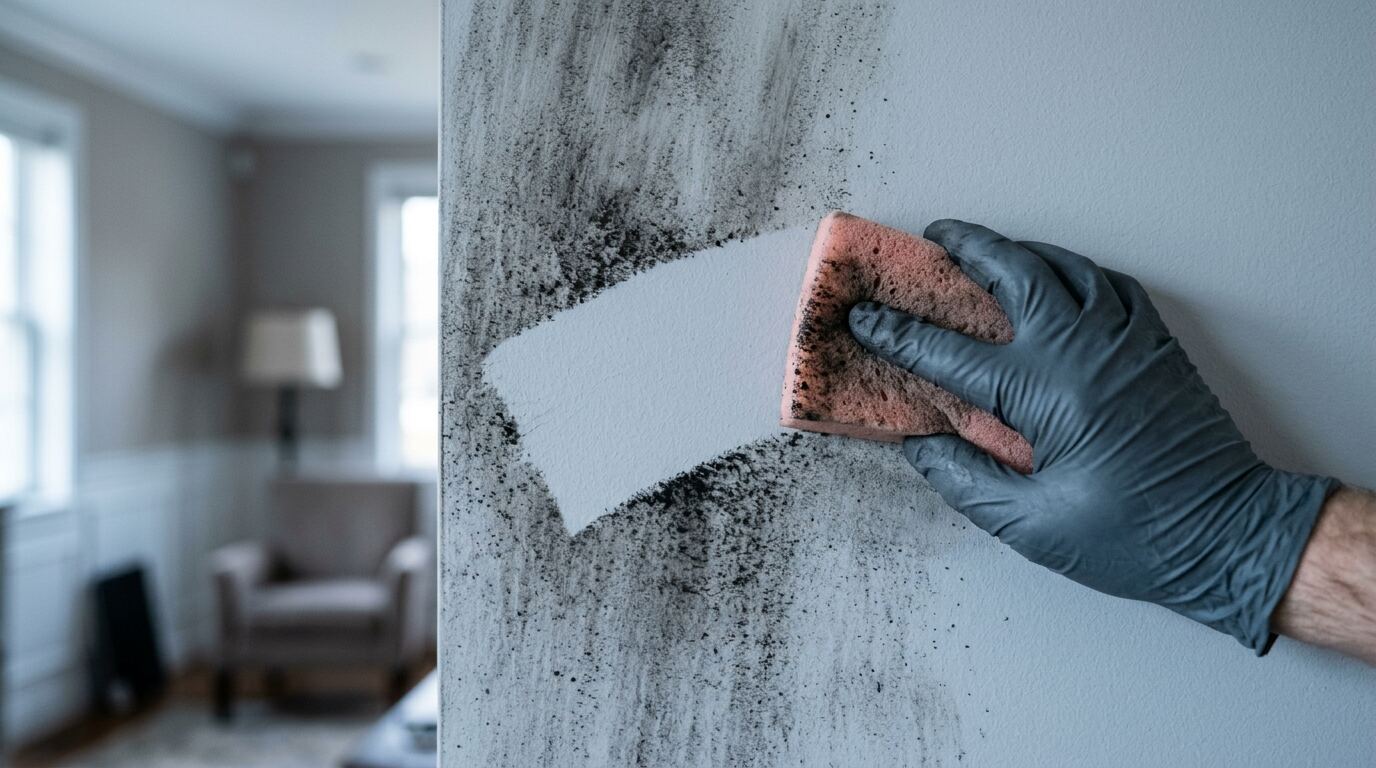
Emphysema causes the lungs to lose their elasticity; it is incurable and progressive, and treatment can only slow it. That is one of the most important reasons a smoke-damaged home needs professional cleaning rather than a weekend with sponges.
What not to do after a fire
- Don’t wash walls or painted surfaces, or shampoo carpet and upholstery, before calling us
- Don’t clean or turn on appliances that were near heat, flames or water until an authorized technician checks them
- Don’t eat canned or packaged food or drinks that were stored near the fire, heat or water
- Don’t turn on ceiling fixtures if the ceiling is wet — the wiring may be damaged
- Don’t send clothing to an ordinary dry cleaner; improper cleaning can set smoke odor permanently
The fewer chemicals used to clean, the better for you, the environment and the final cost. Full list: 8 things not to do after a house fire.
Our fire restoration process
Nobody should have to wait for help after a fire, which is why our technicians are on call 24 hours a day, 365 days a year.
- Emergency assessment and board-up: once the fire department releases the property, we assess structural and electrical safety and board up broken windows, doors and roof openings against weather and intruders.
- Water from firefighting: hose water often damages a larger area than the fire itself; extraction and structural drying begin immediately.
- Contents inventory and pack-out: salvageable furniture, clothing and electronics are itemized, packed and cleaned off site; non-salvageable items are photographed and listed for your claim.
- Soot removal: HEPA vacuuming, dry sponging and specialized cleaners are applied in stages to walls, ceilings, cabinets and hard surfaces.
- Air cleaning and deodorization: HEPA air scrubbers run continuously and thermal fogging neutralizes odor that has penetrated the structure; see smoke and odor removal.
- Demolition and rebuild: charred or unsalvageable materials are removed, remaining surfaces sealed against odor, and the structure, walls and floors restored.
Wildfire smoke in Southern California
Homes miles from a wildfire can fill with fine ash and soot through vents, attic openings and gaps around doors and windows. That residue is often corrosive and should be cleaned with HEPA methods, not a leaf blower or a broom. Our Los Angeles team cleans surfaces, HVAC systems and contents after wildfire smoke events and documents the damage for smoke claims. See the wildfire smoke cleanup guide.
Blue Arrow sends invoices straight to your insurance carrier to ease the burden during a stressful time. We provide fire scene photos, contents inventories and cleaning and demolition records, and meet the adjuster on site. See insurance claim help.
Fire restoration FAQ
It was a small kitchen fire. Do other rooms need cleaning?
They should be checked. Smoke travels through HVAC ducts, under doors and up stairwells, and collects on cooler surfaces — behind curtains, inside closets and in ceiling corners of other rooms. We inspect room by room and clean only what is actually affected.
Can smoke-damaged clothing be cleaned?
Most clothing recovers with professional odor treatment and cleaning. Avoid regular dry cleaners and repeated hot washing and drying at home, which can lock odor into the fibers.
How long until we can move back in?
A contained kitchen fire with light smoke may take a week or two. Fires that require structural repairs, rewiring or permits can take several months. We give you a realistic schedule after the assessment and update it as work progresses.
Does homeowners insurance cover smoke damage?
Fire and smoke are covered perils under virtually all homeowners policies, including additional living expenses while you are displaced. Coverage limits and deductibles depend on your policy.