The principle
An odor is made of molecules. As long as the material that releases them is still in the house, no product can make the smell go away for good. Real deodorization is 80% source removal and cleaning, 20% treatment.
Odors we eliminate
- Fire and smoke: protein fires from cooking, synthetic materials, wood fires and wildfire smoke — each leaves a different residue
- Mildew and musty odor: after leaks, floods and long-term humidity in basements and crawl spaces
- Sewage: after drain and sewer backups
- Pet urine: soaked into carpet pad and subfloor
- Tobacco and cannabis smoke: in rentals and homes being prepared for sale
- Decomposition and unattended spoilage: such as a refrigerator left off during a power outage
Deodorization and disinfection equipment
| Method | How it works | Best for |
|---|---|---|
| HEPA air scrubbers | Filter airborne particles, soot and spores down to 0.3 microns | Every smoke, mold and demolition job |
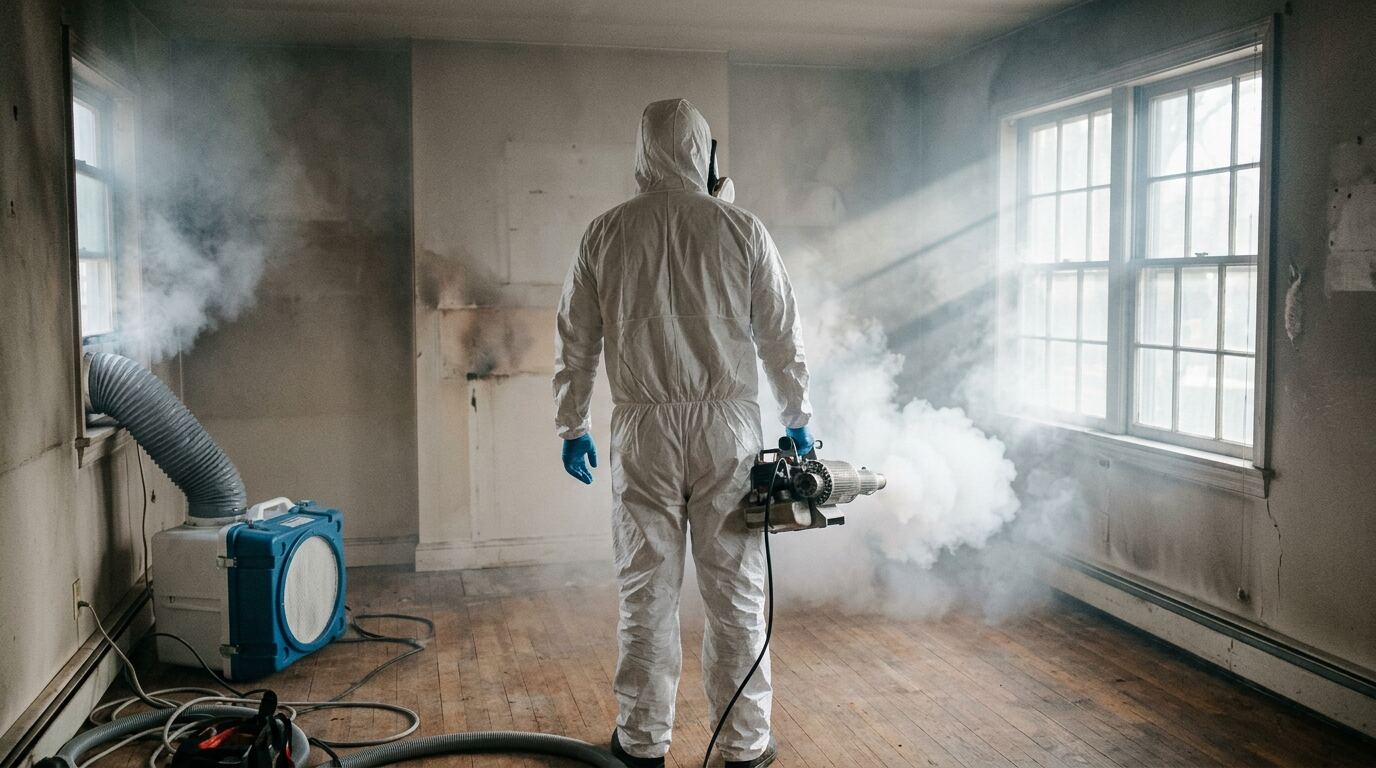
| Thermal fogging | Heated deodorant forms a fine fog that penetrates the same pores smoke did | Smoke odor in structure and contents |
| ULV fogging | Cold fog of antimicrobial or deodorizer for wide coverage | Sewage, mildew and bacterial odors |
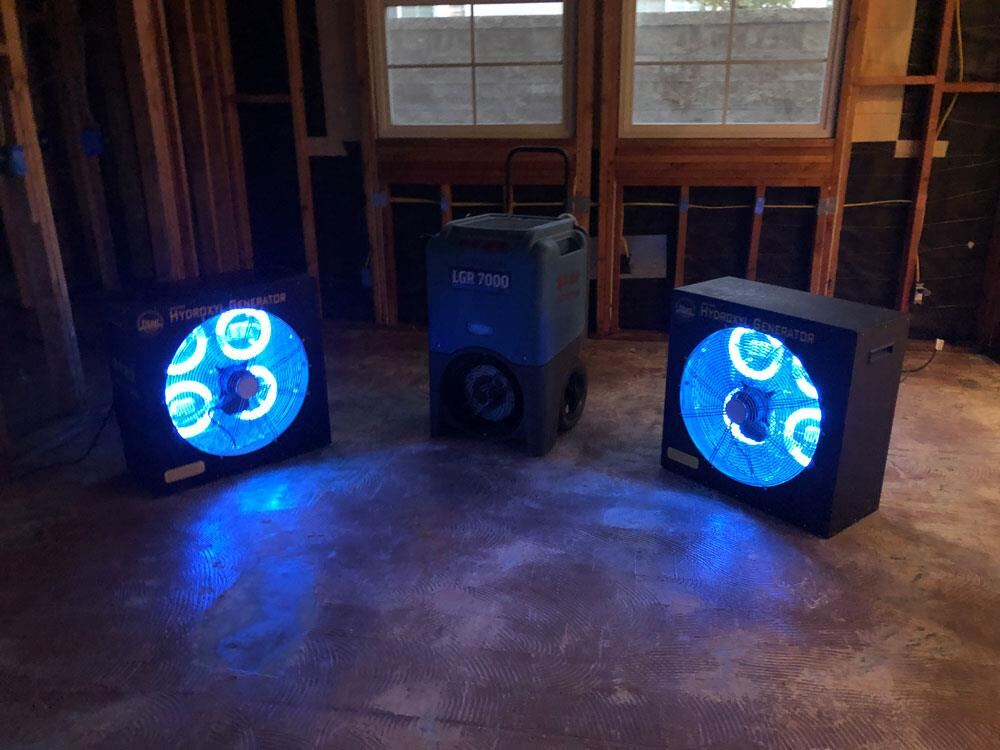
| Hydroxyl generators | Produce hydroxyl radicals that break down odor molecules; safe with occupants | Occupied homes and offices |
| Ozone (controlled use) | Strong oxidizer for severe odor; the space must be unoccupied | Vacant properties, vehicles, heavy smoke |
| Odor-sealing primers | Encapsulate residual odor in framing and subfloor | After fire and pet urine removal |
Our odor removal steps
- Identify the source and the materials it has penetrated.
- Remove what can’t be cleaned — saturated pad, insulation, charred framing.
- Clean every remaining surface, including inside cabinets, closets and HVAC ducts.
- Treat with the right method: thermal fogging for smoke, antimicrobials for biological odors, hydroxyl or ozone for severe cases.
- Seal framing and subfloors with odor-blocking primer where needed.
- Verify with a walk-through in normal conditions — HVAC on, windows closed.
Odor removal FAQ
Is ozone safe?
Ozone is effective but must only be used in unoccupied spaces — no people, pets or plants — followed by a ventilation period. For occupied homes we use hydroxyl generators instead.
How long does odor removal take?
Light odors are often resolved in one to two days. Heavy smoke or urine odors that require removal and sealing can take a week or more.
Will the smell come back?
Not if the source was removed and the structure properly treated. Odor that returns on humid days is a sign something was masked instead of removed.