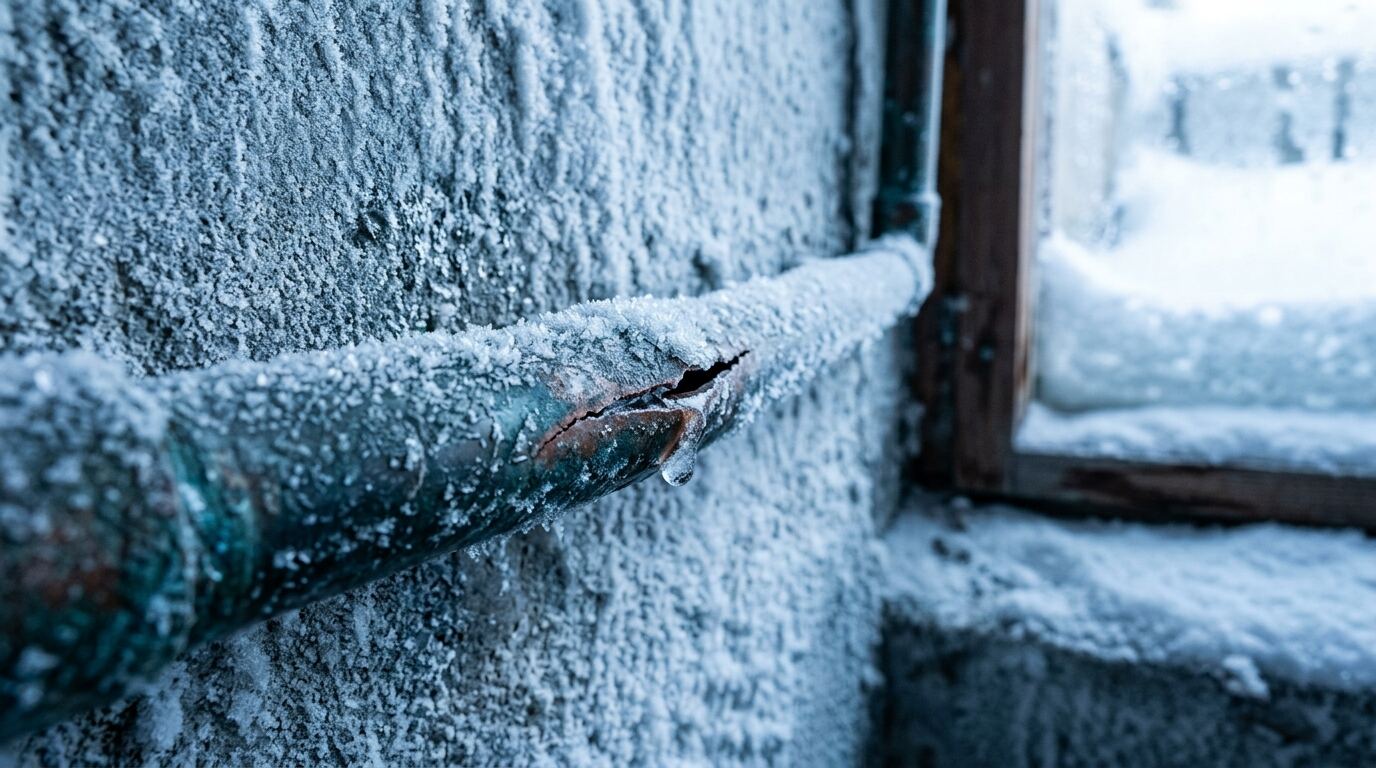
Why pipes burst when they freeze
Water expands as it freezes. The ice plug itself rarely splits the pipe; instead, pressure builds in the water trapped between the ice and a closed faucet until the pipe gives way — often somewhere other than where the ice formed. That’s why many bursts are only discovered when the pipe thaws and water starts pouring out.
Pre-winter checklist
- Shut off and drain outdoor hose bibs from the inside valve; disconnect hoses
- Insulate pipes in garages, crawl spaces, attics and along exterior walls with foam sleeves
- Seal gaps where pipes and cables enter the house, and around basement rim joists
- Consider thermostatically controlled heat cable on pipes that have frozen before
- Know exactly where your main water shut-off is, and make sure it turns
- Have the heating system serviced before the first cold snap
- Drain and shut down sprinkler systems
On the coldest nights
- Keep the thermostat at the same temperature day and night
- Open kitchen and bathroom cabinet doors on exterior walls to let warm air reach the pipes
- Let a faucet on an exterior wall drip slightly — moving water is harder to freeze and relieves pressure
- Keep the garage door closed if water lines run through it
Leaving home for the holidays
- Keep the heat set no lower than about 55°F
- Ask someone to check the house daily during deep freezes
- For longer absences or vacant properties, shut off the main and drain the lines
- Consider a Wi-Fi water leak sensor and a smart shut-off valve
Insurance note: many policies exclude freeze damage in a vacant or unoccupied home unless you maintained heat or shut off and drained the water. Read Does insurance cover water damage?
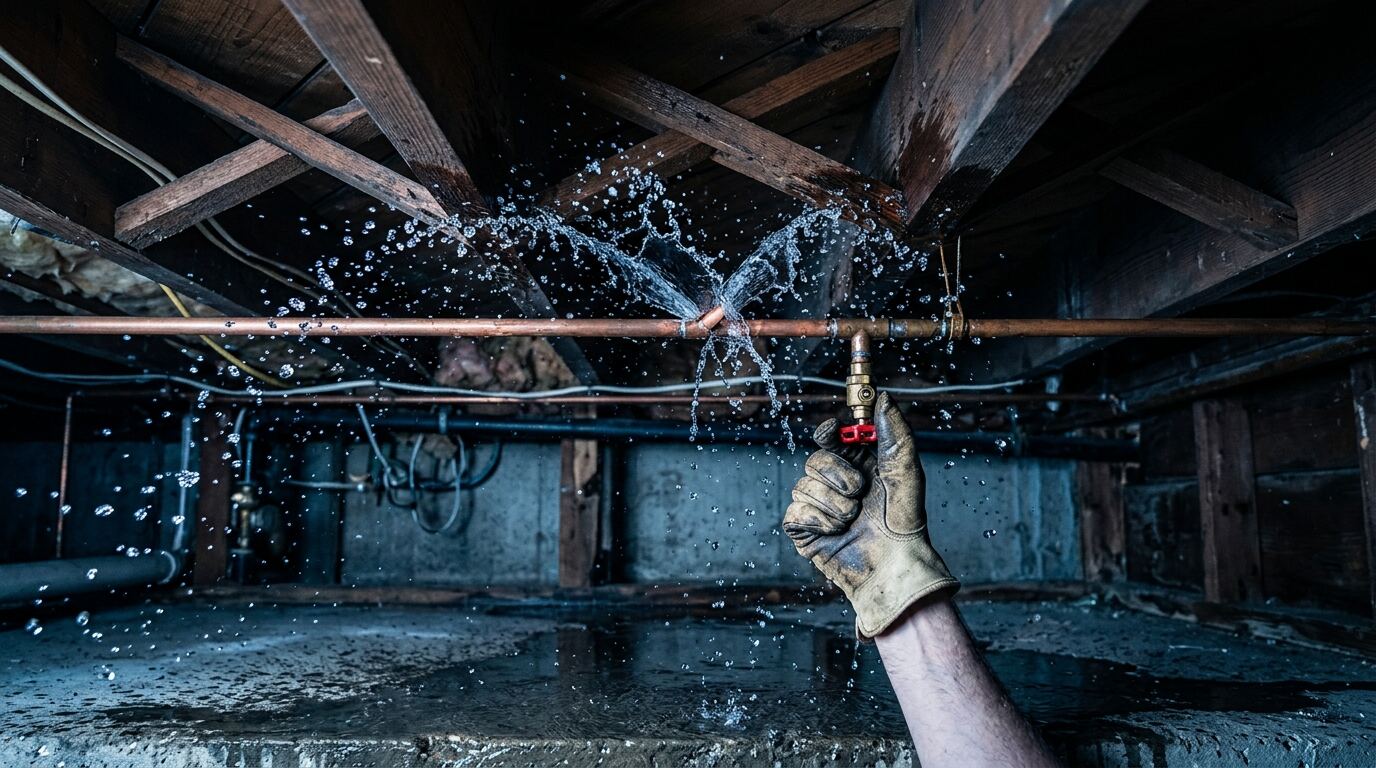
How to thaw a frozen pipe safely
- Open the faucet the pipe feeds so melting water has somewhere to go.
- Apply gentle heat, starting at the faucet end and working back toward the frozen section: a hair dryer, heating pad or warm towels.
- Never use an open flame, propane torch or charcoal heater.
- Check other faucets — if one pipe froze, others may have too.
- If the frozen section is inside a wall or you can’t reach it, call a professional.
If a pipe bursts
Shut off the main water valve immediately, turn off power to wet areas, open the lowest faucet to drain the system and call us. Follow the steps in burst pipe emergency and the first 24 hours after water damage.
FAQ
At what temperature do pipes freeze?
Risk rises when outdoor temperatures stay below about 20°F, especially for pipes in unheated spaces or exterior walls. Wind makes it worse.
Is PEX pipe freeze-proof?
PEX is more tolerant of freezing than copper, but fittings can still fail and PEX isn’t immune. Insulate it like any other pipe.