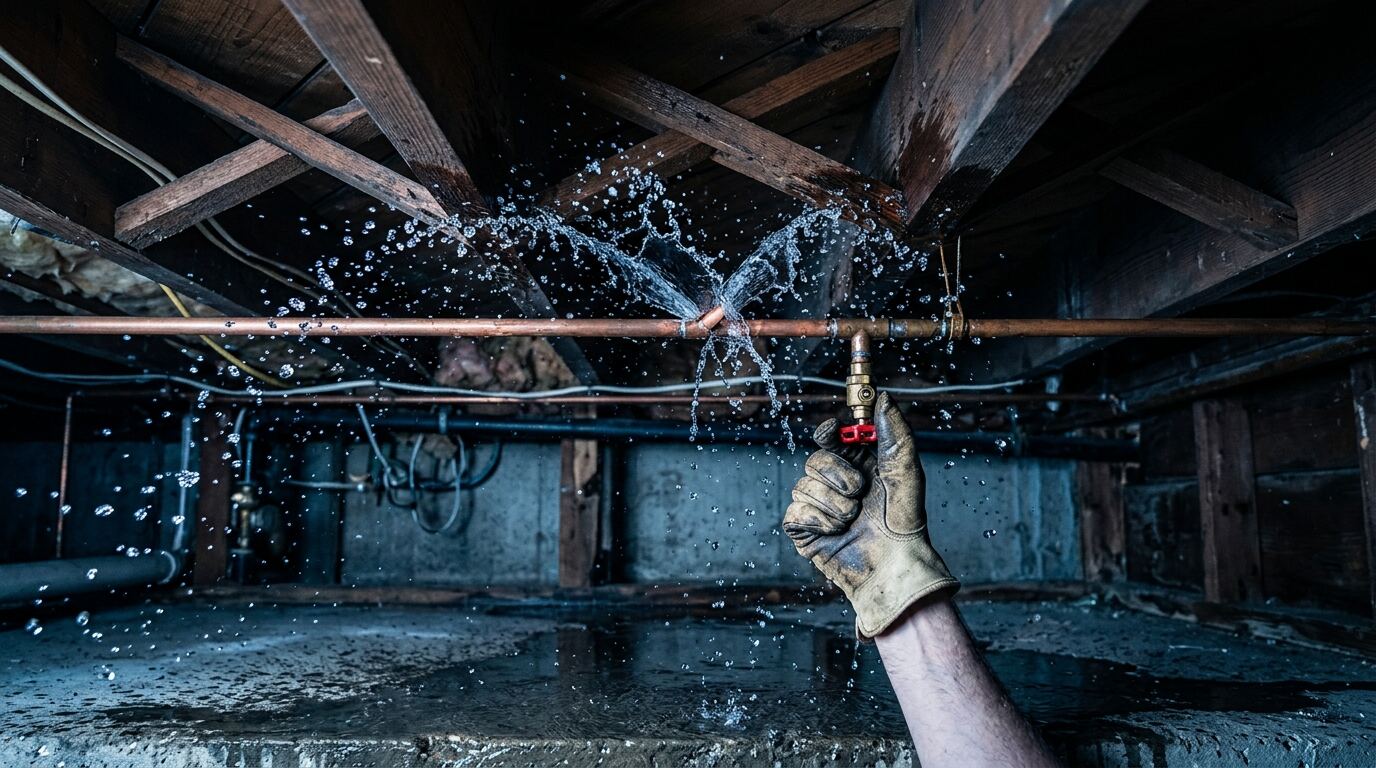
- Close the main water shut-off. In most New York homes it’s where the water line enters the basement, near the meter. In Southern California it’s often outside, near the front hose bib or in a box at the curb.
- Cut power to wet areas at the breaker panel — only if you can reach it without standing in water.
- Open a faucet on the lowest floor to drain the remaining pressure from the lines.
- Photograph the break and the damage before anything is moved, then call.
Where pipes burst most often
In New York, most bursts happen during the first deep freeze of winter, in pipes that run through unheated or poorly insulated spaces. In Los Angeles, freezing is rare; bursts are more often caused by corrosion, high water pressure and failing fittings.
- Pipes in exterior walls, especially behind kitchen sinks on the north side of the house
- Garages, crawl spaces and unheated attics
- Outdoor hose bibs that weren’t drained and shut off in the fall
- Vacant homes and second homes where the heat was turned down too far
- Old galvanized steel lines that have corroded from the inside
- Braided washing machine and toilet supply hoses that were never replaced
What happens when we arrive
- Confirm the source is isolated and make a temporary repair or cap so water can be restored to the rest of the house where possible; a permanent pipe repair follows.
- Map the water with thermal imaging and moisture meters — water from a ceiling break travels along joists and down wall cavities, often far from the visible drip.
- Extract standing water from floors and carpet.
- Relieve and remove sagging drywall ceilings and saturated insulation safely.
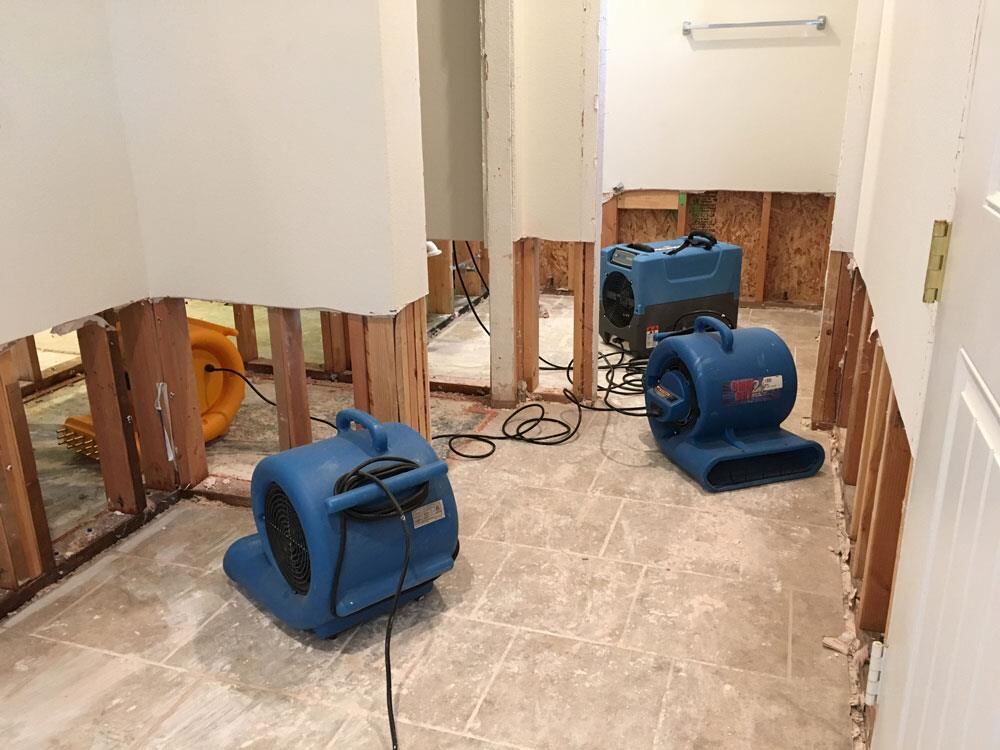
- Dry with air movers, dehumidifiers and, where needed, injection drying for wall and ceiling cavities.
- Document and verify with photos and daily readings until the structure is dry, then rebuild.
The ceiling is bulging or dripping — what now?
A drywall ceiling that is bowing downward is holding water and can come down without warning. Keep everyone out from under it and move electronics away. If it is safe, you can place a bucket underneath and puncture the lowest point of the bulge with a screwdriver to let the water drain in a controlled way — but never do this near a light fixture, and never stand directly beneath a large bulge. When in doubt, wait for us.
Insurance points to know
Homeowners policies generally cover sudden and accidental discharge of water from plumbing, including frozen pipes — provided you took reasonable care to maintain heat or to drain the system if the home was vacant. The broken pipe itself is often not covered while the resulting water damage is. Keep the failed section of pipe; your adjuster may want to see it. More in Does insurance cover water damage?
Burst pipe FAQ
I can’t find the main shut-off. What should I do?
Call us and we’ll help you locate it over the phone. If it still can’t be found, the water utility can shut off service at the curb stop. Once the emergency is over, tag your main valve so everyone in the household knows where it is.
Can I use a hair dryer or space heater to thaw a frozen pipe?
A hair dryer on a pipe you can see, working from the faucet end back toward the frozen section, is reasonable. Never use an open flame or a torch, and don’t leave a space heater unattended. If a pipe is frozen inside a wall, call a professional. See preventing frozen pipes.
How soon can we use water again?
Usually the same day. Once the broken section is isolated or capped, water can typically be restored to the rest of the house while drying continues.