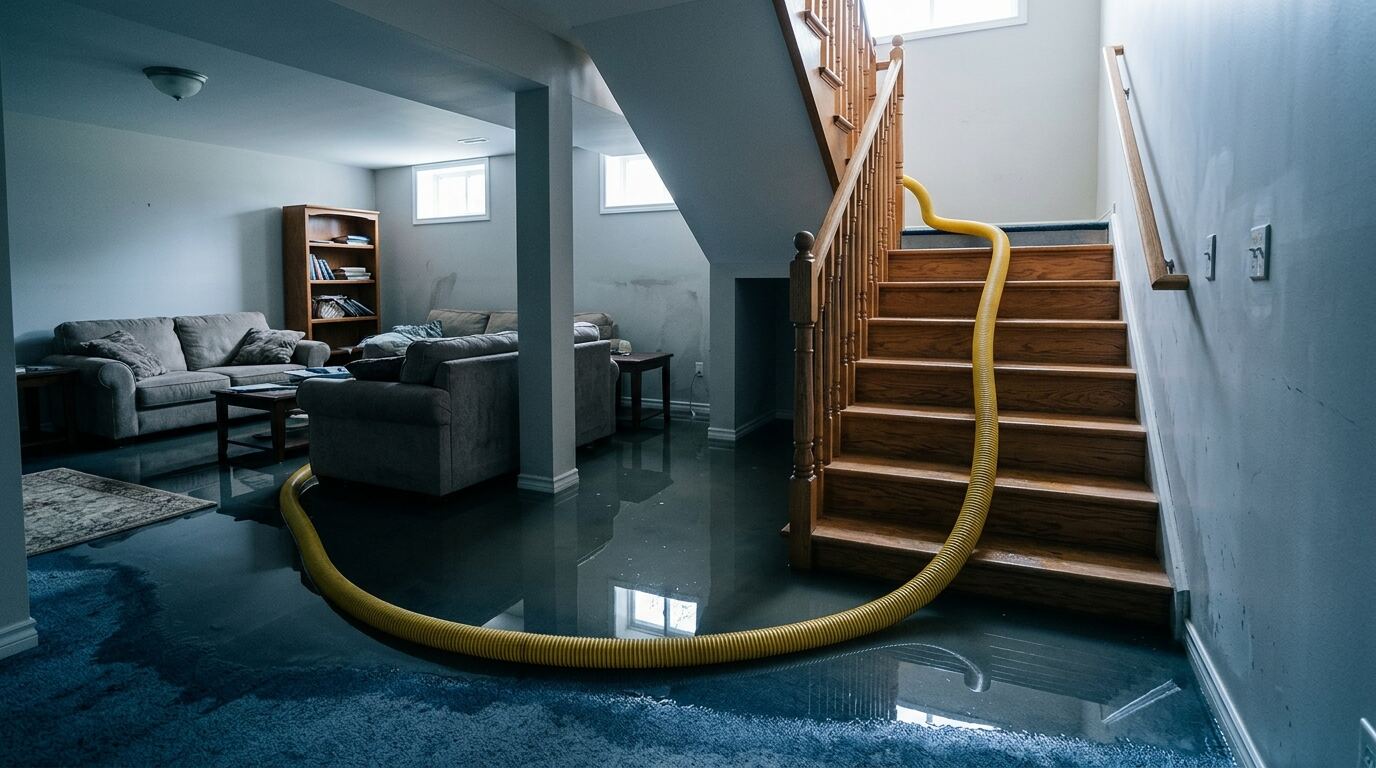
If water is near outlets, a furnace, a water heater or an electrical panel, do not walk in. Shut off power at the main breaker only if you can reach it from a dry location; otherwise call the utility. Outdoor flood water should always be treated as contaminated.
Why basements flood on Long Island, in NYC and in Los Angeles
Many Long Island and Queens homes have finished basements that sit below street grade, on sandy soil with a high water table in low-lying and coastal areas. During heavy rain the municipal storm system backs up, gutters overflow next to the foundation and water finds the lowest entry point: window wells, basement doors, floor drains and hairline cracks. In Southern California, flooding is less frequent but more sudden — hillside runoff, overwhelmed street drains and mud flows after wildfires strip slopes of vegetation.
- Downspouts discharging right at the foundation wall
- Sump pumps that fail when the power goes out — exactly when they’re needed
- No backwater valve on the sewer line, so street surcharge enters through floor drains
- Grading that slopes toward the house instead of away from it
- Uncovered window wells and exterior stairwell drains clogged with leaves
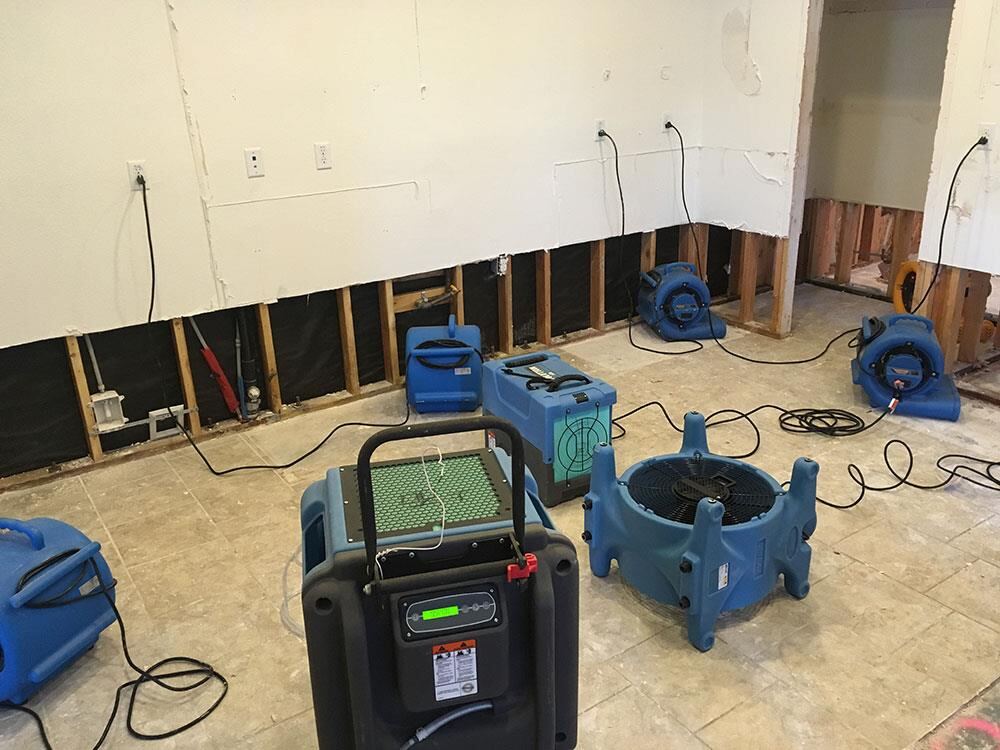
Our flood cleanup process
- Safety check: electrical hazards, gas appliances, structural concerns and contamination level are assessed before work starts.
- Pump-out: submersible and trash pumps remove standing water; truck-mount or portable extractors pull water from carpet and flooring.
- Mud and debris removal: silt and debris are shoveled and vacuumed out; surfaces are pressure-cleaned where appropriate.
- Tear-out: flood water is Category 3, so saturated carpet and pad, drywall, insulation and particleboard are removed and bagged.
- Clean and disinfect: all remaining surfaces are cleaned and treated with EPA-registered antimicrobials.
- Structural drying: air movers and dehumidifiers dry framing, concrete and masonry; readings are logged daily.
- Mold prevention and rebuild: once materials are verified dry, we can reinstall drywall, flooring and trim.
Homeowners insurance vs. flood insurance
This is where most flood claims go wrong. A standard homeowners policy (HO-3, HO-5) generally excludes surface water and flood. Flood damage is usually covered only by a separate flood policy through the National Flood Insurance Program (NFIP) or a private flood carrier, and NFIP policies limit coverage in basements to specific items such as furnaces, water heaters and electrical panels. Water backing up through a drain or sewer line is also commonly excluded unless you purchased a water backup endorsement.
| Cause | Where coverage usually comes from |
|---|---|
| Rising surface water, storm surge, overflowing streams | Flood insurance (NFIP or private) |
| Water backing up through floor drains or the sewer line | Water / sewer backup endorsement on the homeowners policy |
| Wind-driven rain entering through storm damage to the roof | Homeowners policy (windstorm) |
| Sump pump overflow | Often the backup endorsement — check your wording |
Whatever the policy, we photograph the water line, measure depths, list removed materials and damaged contents, and keep daily moisture logs so the adjuster can see the full picture. See insurance claim help and how to prevent basement flooding.
Flood cleanup FAQ
Can I pump out the basement myself with a shop vac?
For an inch of water, a wet vac can buy time, but flood water is contaminated and the hidden moisture in walls and floors is what causes mold. Never use gas-powered pumps or generators indoors, and do not stand in water near live electricity.
How fast should the basement be pumped out?
As soon as it is safe. Materials that stay wet longer than 24 to 48 hours are at high risk of mold. If there are several feet of water against the foundation, water should be removed in stages to avoid unbalanced pressure on the walls.
Can flooded carpet be cleaned and kept?
Carpet and pad soaked by outdoor flood water or sewage are Category 3 and should be discarded. Area rugs of value can sometimes be sent out for specialized cleaning; we will tell you which items are worth attempting.
What about my furnace and water heater?
Any gas or electrical appliance that was underwater must be inspected by a qualified technician before it is turned back on. Do not relight pilot lights yourself.