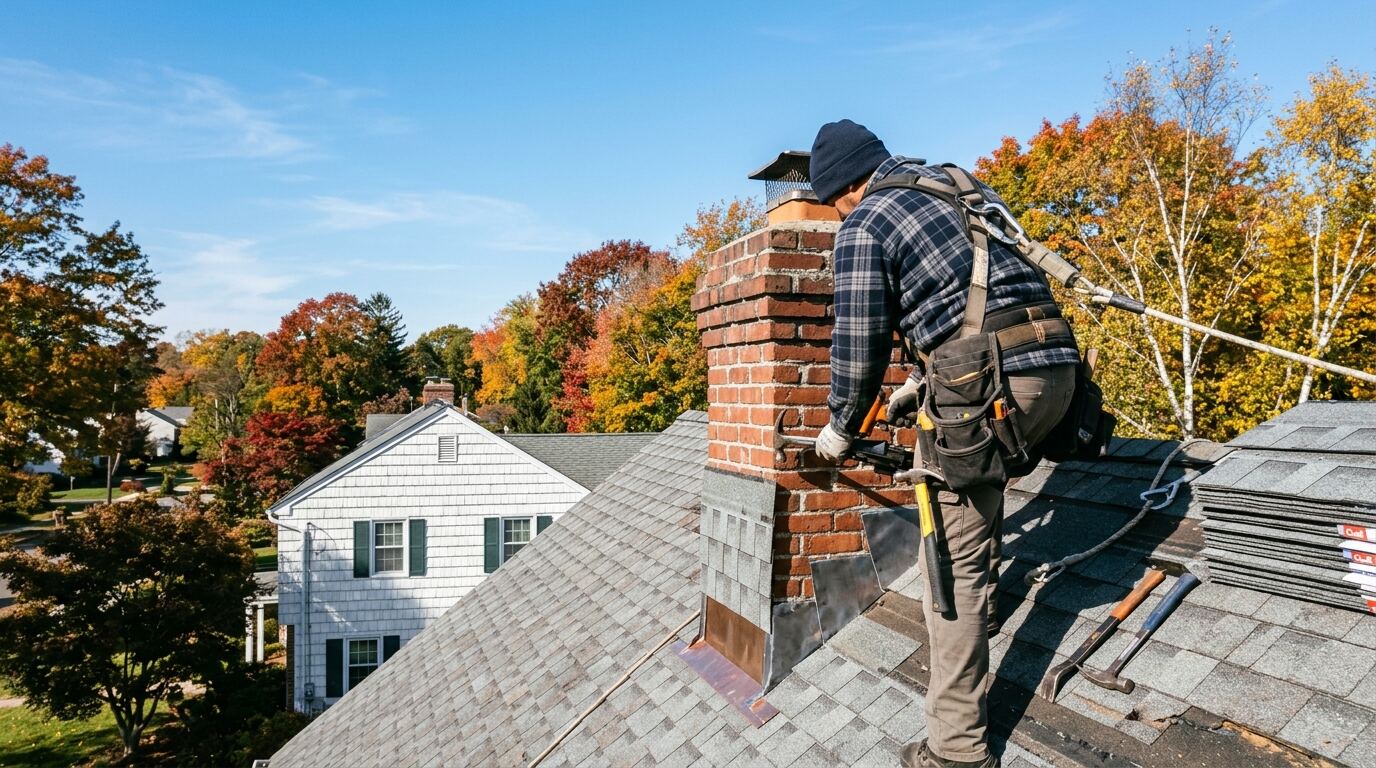
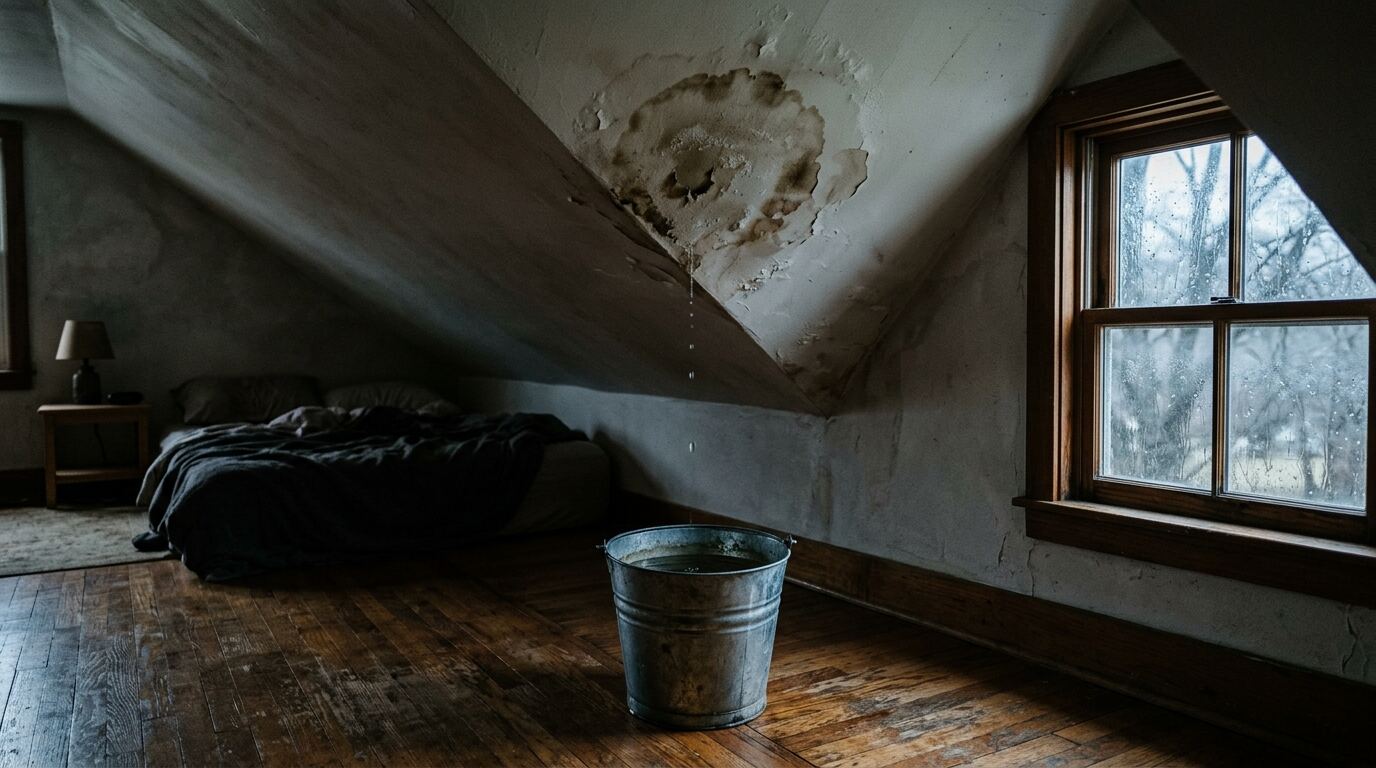
Water enters at a flashing seam or a cracked shingle, runs along the roof deck and rafters, and appears on a ceiling several feet away. That’s why we trace roof leaks from the attic side with moisture meters and thermal imaging before anything is torn off.
Common causes of roof leaks
New York & Long Island
- Missing, cracked or lifted asphalt shingles after nor’easters and high winds
- Failed step and counter flashing around chimneys, dormers and skylights
- Cracked rubber boots around plumbing vent pipes
- Ice dams at the eaves that force meltwater back under the shingles
- Clogged gutters overflowing into the fascia and soffit
- Blistered or split seams on flat roofs of Brooklyn and Queens row houses
Los Angeles & Inland Empire
- Cracked or slipped clay and concrete tile, often from foot traffic or earthquakes
- Deteriorated underlayment beneath tile that has baked for decades in the sun
- Clogged valleys and roof drains after a long dry season, overwhelmed by the first heavy storm
- Flat and low-slope roofs with ponding water
Our roof leak repair process
- Emergency protection: if rain is coming, the affected section is tarped and secured, and interior contents are moved or covered.
- Inspection: roof surface, flashing, vents, gutters and the attic side of the deck are inspected; findings are photographed.
- Repair: damaged shingles or tile are replaced, flashing is resealed or replaced, vent boots renewed and gutters cleared.
- Interior mitigation: wet insulation is removed, ceilings and walls are dried and checked for mold.
- Restoration: drywall, texture and paint are restored to match.
Where a roof has reached the end of its life, we’ll tell you honestly so you can plan a replacement instead of paying for repeated patches. Roofing work that requires a license or permit is performed by appropriately licensed professionals under local code.
Ice dams in New York winters
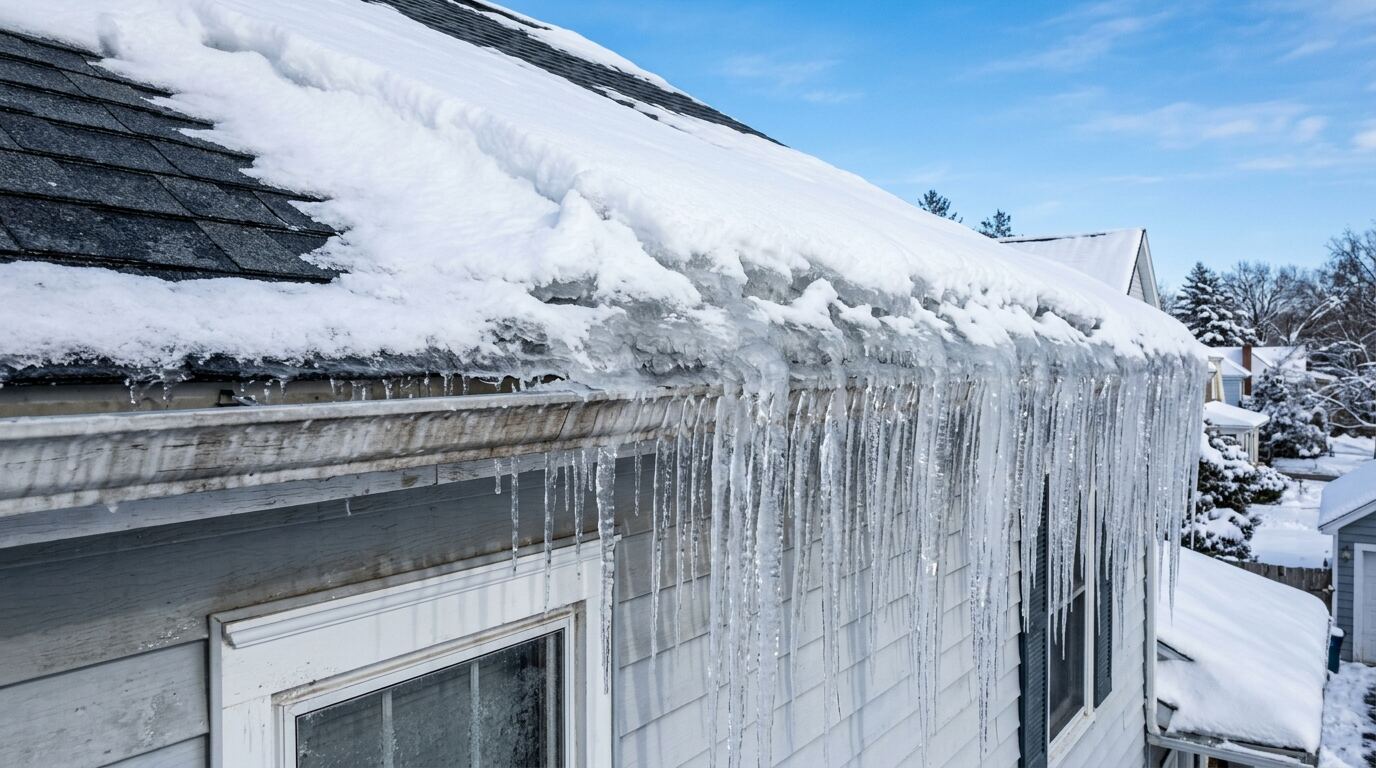
Ice dams form when warm air leaking into the attic melts the snow on the upper roof. The meltwater refreezes at the colder eaves and builds a ridge of ice that traps water behind it. The cure is in the attic: air sealing, adequate insulation and ventilation. In the short term, don’t chop at the ice with a hammer — you’ll damage the shingles. Read more in 7 early signs of a roof leak.
Does homeowners insurance cover a roof leak?
Damage from a sudden event — wind tearing off shingles, a tree limb puncturing the roof, hail — is generally covered, along with the resulting interior damage. Leaks caused by age, wear and deferred maintenance are usually excluded. Photograph the roof and ceilings as soon as it’s safe, and keep any shingles that blew off.
Roof leak FAQ
Can you tarp the roof tonight?
In most cases, yes, as long as it is safe to be on the roof. We won’t send crews up during lightning or in high winds; in that case we protect the interior and return as soon as conditions allow.
Do I need to replace the whole ceiling?
Not necessarily. If the drywall is still firm and dries quickly, it can often be kept and repainted with a stain-blocking primer. Sagging or crumbling drywall and wet insulation must come out.
How can I tell if it’s the roof or a pipe?
If the stain grows only when it rains, it’s most likely the roof, flashing or a window. If it appears regardless of weather, or under a bathroom, suspect plumbing. Our leak detection service confirms the source.