What mold needs to grow
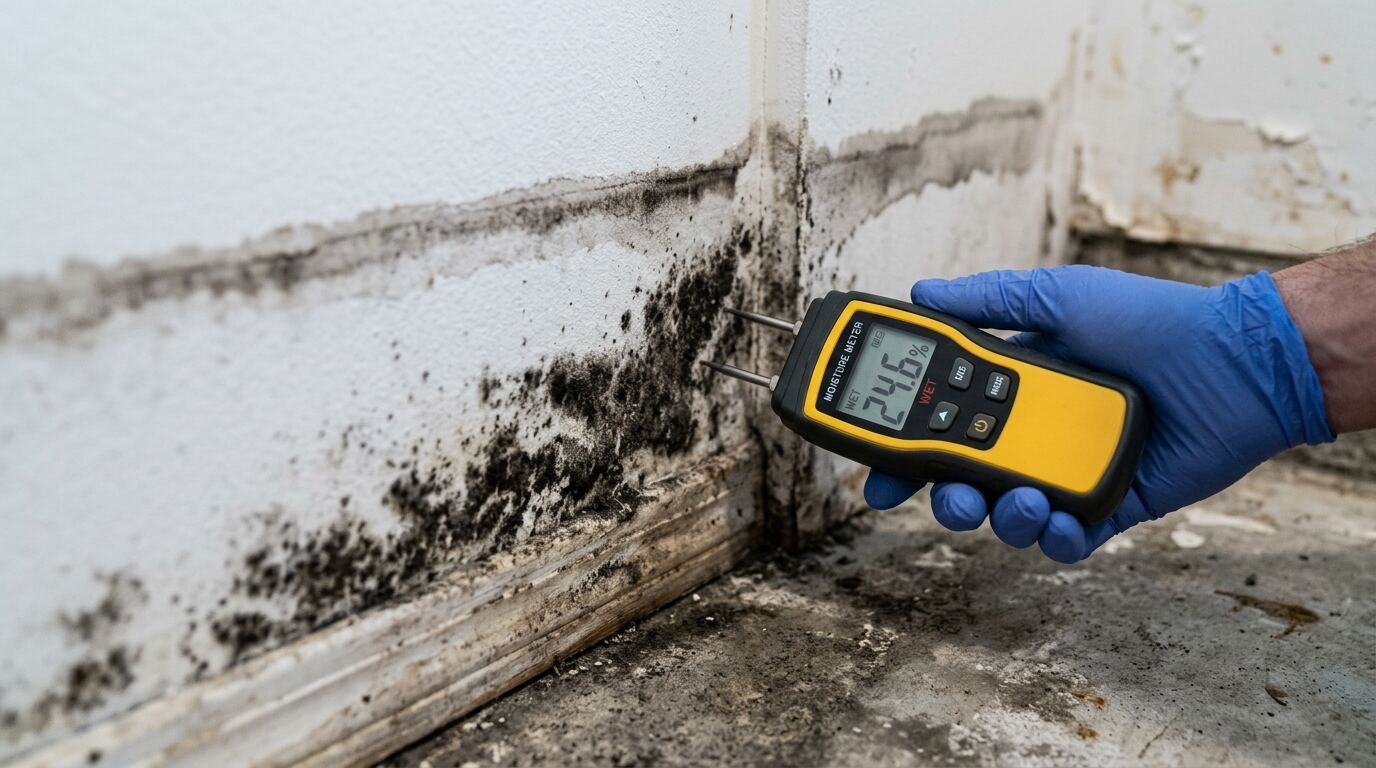
Mold needs four things: spores (always present), food (drywall paper, wood, dust, fabric), a suitable temperature (most homes) and moisture. Moisture is the only one you can control. Indoor relative humidity consistently above about 60%, a slow leak or materials left wet for more than 24 to 48 hours are enough to start growth.
How mold affects health
Mold releases spores and fragments that can trigger allergic reactions: sneezing, runny nose, itchy eyes, skin irritation. For people with asthma, mold exposure can bring on attacks. Some people are more sensitive, including infants and children, older adults, people with chronic lung conditions and people with weakened immune systems. The CDC and EPA advise removing indoor mold growth and fixing the moisture source regardless of the type of mold.
How to check your home
By smell
An earthy, musty odor — strongest when you open a closet, cabinet or basement door — often comes before visible growth.
By sight
Look for spotting in black, green, gray, white or orange; fuzzy or slimy patches; and stains that keep returning after cleaning. Color does not indicate how dangerous it is.
By location
- Finished basements: base of walls, behind furniture, under carpet
- Bathrooms: ceilings, caulk lines, behind the toilet
- Under kitchen and bathroom sinks
- Closets on exterior walls
- Attics: the underside of the roof deck, especially near bathroom fan outlets
- Anywhere that had a leak in the past year
5 things not to do
- Don’t touch or scrape it without gloves and a respirator — disturbance releases spores
- Don’t point fans at it — you’ll carry spores to clean rooms
- Don’t spray bleach on porous materials — it lightens the stain, doesn’t reach the growth inside and adds water
- Don’t paint over it — the mold keeps growing underneath
- Don’t ignore the source — without fixing the moisture, it comes back
When to call a professional
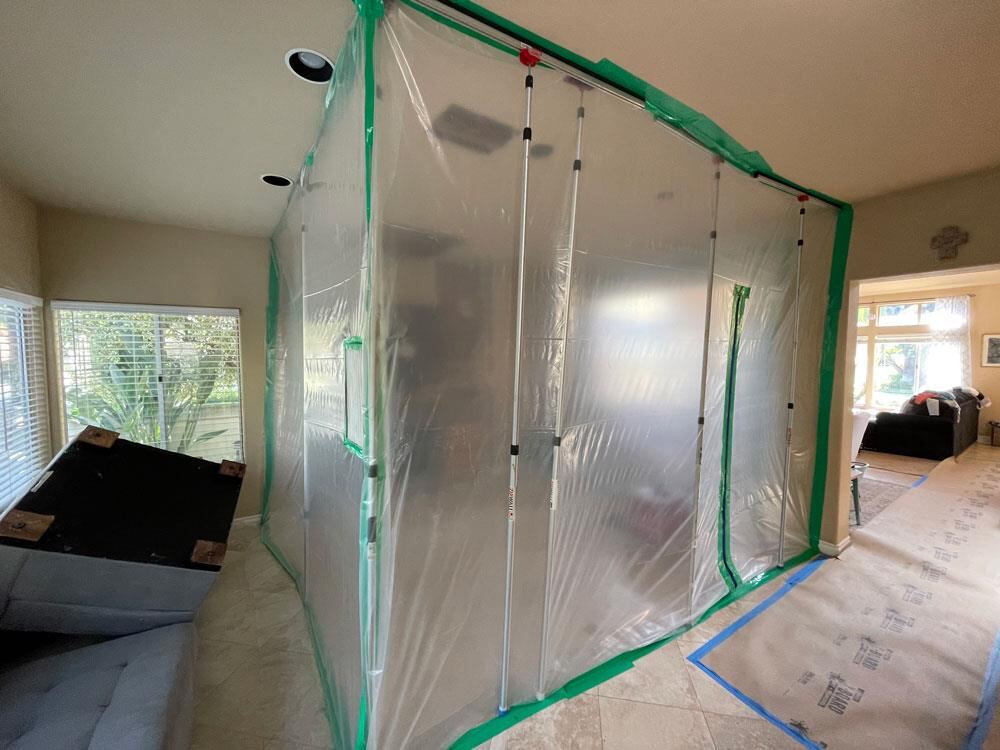
The EPA suggests that areas under about 10 square feet on hard surfaces can often be handled by homeowners with proper protection. Call a professional if the area is larger, if you suspect hidden growth inside walls or HVAC, if it followed sewage or flooding, or if anyone in the home is sensitive. See mold remediation.
FAQ
Will a dehumidifier get rid of mold?
A dehumidifier helps prevent new growth by keeping humidity down, but it doesn’t remove existing mold. Growth that’s already there has to be physically removed.
Should I buy a home mold test kit?
Settle-plate kits almost always grow something, because spores are everywhere. They rarely answer the real question — where is the moisture and how far has growth spread? A moisture inspection is more useful.