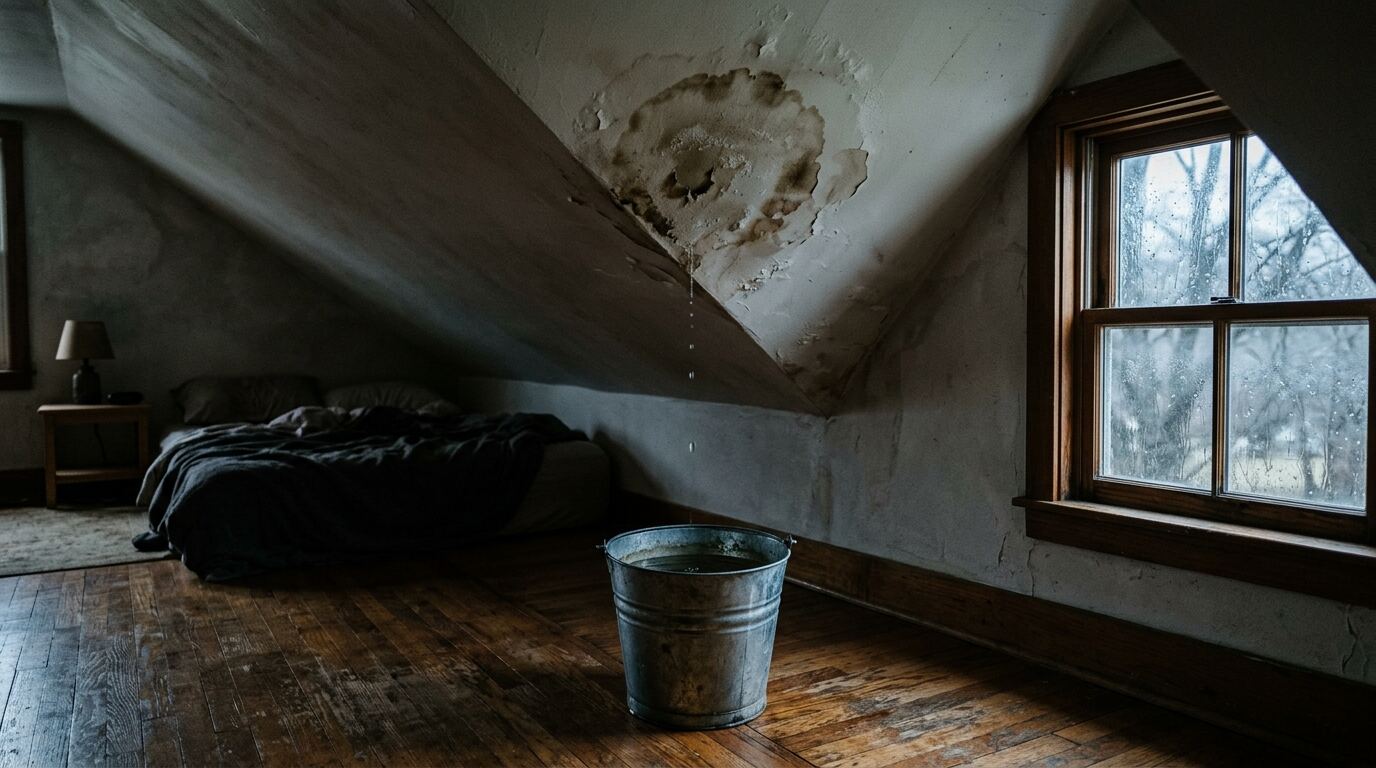
The 7 signs
1. Daylight or damp spots in the attic
On a sunny day, look for light coming through the roof boards. After rain, look for dark or damp spots on the underside of the deck and on rafters.
2. Stained, flattened or wet insulation
Insulation that is matted, discolored or damp below a spot on the roof is a strong sign of an active leak.
3. Ceiling stains and peeling paint
Yellow-brown rings, bubbling paint or a small sag on top-floor ceilings, especially near chimneys, skylights and exterior walls.
4. Musty odor in upper rooms or closets
A persistent musty smell upstairs can signal moisture in the attic or wall cavities.
5. Damaged or missing shingles and tile
Curling, cracked or missing shingles; slipped or broken clay and concrete tile; exposed nail heads.
6. Granules in the gutters
Heavy accumulations of shingle granules in gutters and downspouts mean the shingles are wearing out.
7. Failed flashing and vent boots
Lifted or rusted flashing around chimneys, walls and skylights, and cracked rubber boots around plumbing vents — the most common leak points of all.
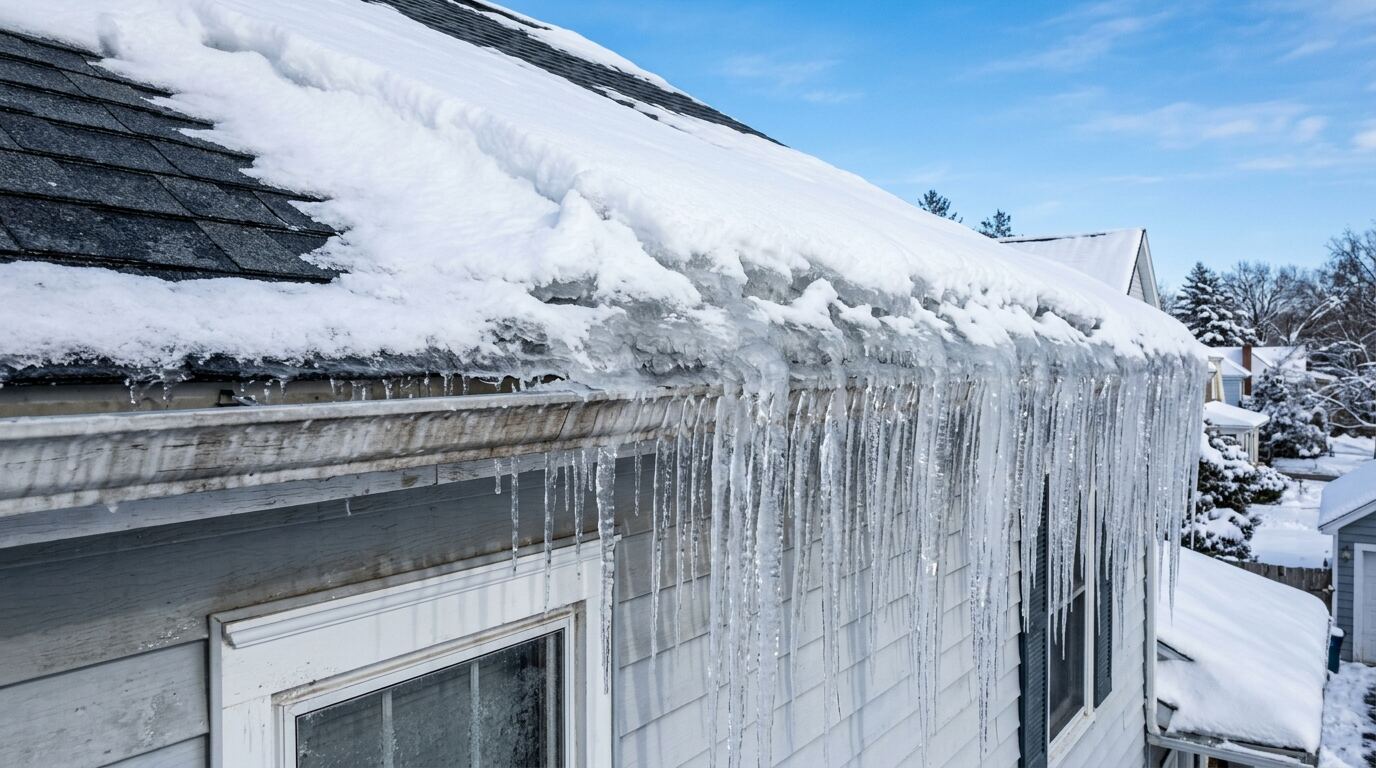
Why ice dams form
Heat escaping from living spaces warms the roof deck and melts snow on the upper roof. The meltwater runs down to the eaves, which sit over the cold overhang, and freezes. Over several days a ridge of ice builds and traps water behind it; that water backs up under the shingles and leaks into walls and ceilings.
- Long-term fix: air-seal the attic floor, add insulation and improve ventilation so the roof stays cold
- Protection: ice-and-water shield membrane at the eaves when re-roofing
- Short term: a roof rake to remove snow from the lower roof from the ground; never chip ice with a hammer or axe
Repair or replace?
| Repair usually makes sense when | Replacement is worth considering when |
|---|---|
| The leak is at a single flashing, vent or small area | Asphalt shingles are near 20–25 years old |
| Shingles are otherwise flat and granulated | Leaks are appearing in several places |
| Storm damage is limited to a section | Tile roof underlayment has failed across the roof |
| The deck is sound | The deck is soft or rotted in multiple spots |
We’ll give you a straight assessment. See roof leak repair.
FAQ
How often should I inspect my roof?
Twice a year — spring and fall — and after any major storm. Check the attic at the same time.
Does insurance cover ice dam leaks?
Many homeowners policies cover water damage from ice dams as a sudden event, but not the cost of fixing the underlying insulation or ventilation problem. Check your policy wording.