The IICRC (Institute of Inspection, Cleaning and Restoration Certification) S500 is the most widely referenced standard for professional water damage restoration in the United States. It uses two separate scales. Category describes how contaminated the water is. Class describes how much water is in the structure and how hard it will be to dry.
Categories: how contaminated is the water?
| Category | Description | Typical sources |
|---|---|---|
| Category 1 Clean water | Originates from a sanitary source and poses no substantial risk at the start | Broken supply lines, sink or tub overflow with no contaminants, ice-maker lines, melting ice |
| Category 2 Gray water | Significant contamination that may cause discomfort or illness if contacted or consumed | Washing machine and dishwasher discharge, toilet overflow with urine only, sump pump failures, aquariums |
| Category 3 Black water | Grossly contaminated, may carry pathogens and toxic substances | Sewage, toilet backflow from beyond the trap, rising flood water from rivers and streams, wind-driven rain from storms, seawater |
Classes: how much has to evaporate?
| Class | What it looks like |
|---|---|
| Class 1 | Small area, mostly low-porosity materials such as concrete or vinyl; little water absorbed |
| Class 2 | A whole room or more; carpet and pad wet; water wicked up walls less than about 24 inches |
| Class 3 | Water came from above; ceilings, walls, insulation and carpet saturated; wicking higher than 24 inches |
| Class 4 | Specialty drying: deeply held water in hardwood, plaster, concrete, brick or stone that needs low humidity and longer drying |
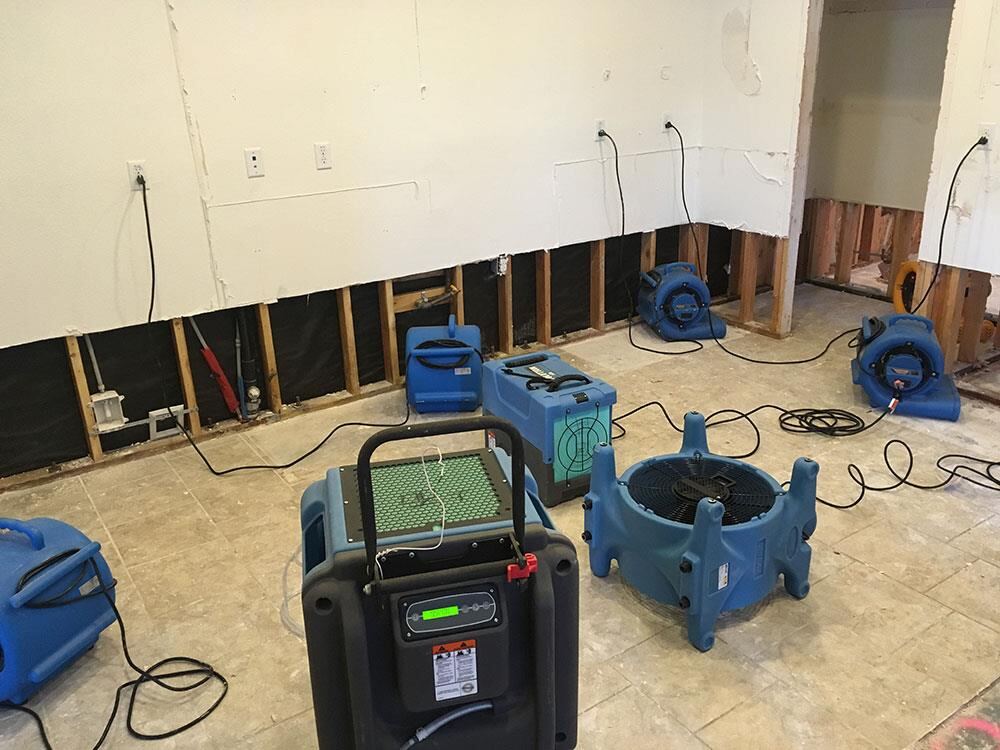
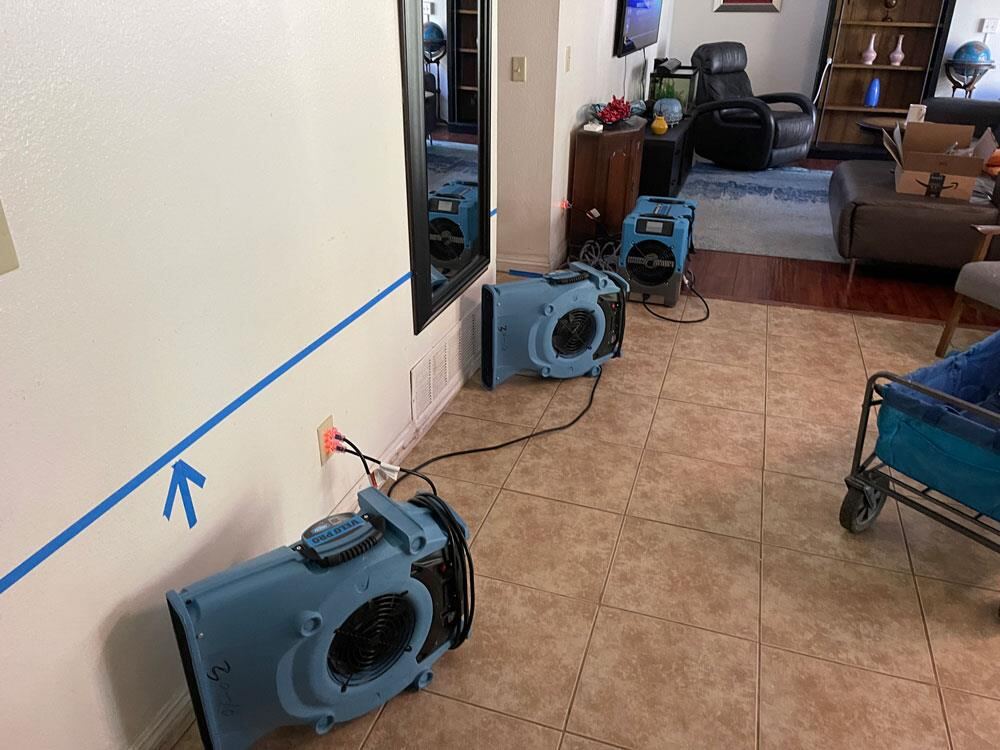
The class determines how many air movers and how much dehumidification capacity a job needs. Too little equipment means slower drying and more mold risk; too much wastes energy. That’s why placement is calculated, not guessed.
Why a category can change
Water doesn’t stay clean. Category 1 water that sits for 48 hours or more, passes through dirty materials or contacts building contaminants can degrade to Category 2 or 3. A clean supply line leak that runs through a basement with stored boxes for three days is no longer a clean-water job. This is one of the strongest reasons to start mitigation immediately.
What can be saved in each category
| Material | Category 1 | Category 2 | Category 3 |
|---|---|---|---|
| Carpet | Usually dried in place | Often cleaned and kept | Removed |
| Carpet pad | Often dried | Usually replaced | Removed |
| Drywall | Usually dried | Dried if not saturated, cleaned | Removed above the water line |
| Hardwood flooring | Often saved | Case by case | Usually removed |
| Upholstered furniture | Often cleaned | Case by case | Usually discarded |
Handling Category 3 water? Read sewage cleanup and flood cleanup. For clean-water losses, see water damage restoration.
FAQ
Why does the category matter for my insurance claim?
It explains why certain materials were removed rather than dried. Adjusters expect the scope to follow the standard, so documenting the category and why protects your claim.
Is a toilet overflow always black water?
Not always. Overflow of clean bowl water is typically Category 1 or 2; water containing feces or coming from beyond the trap is Category 3.