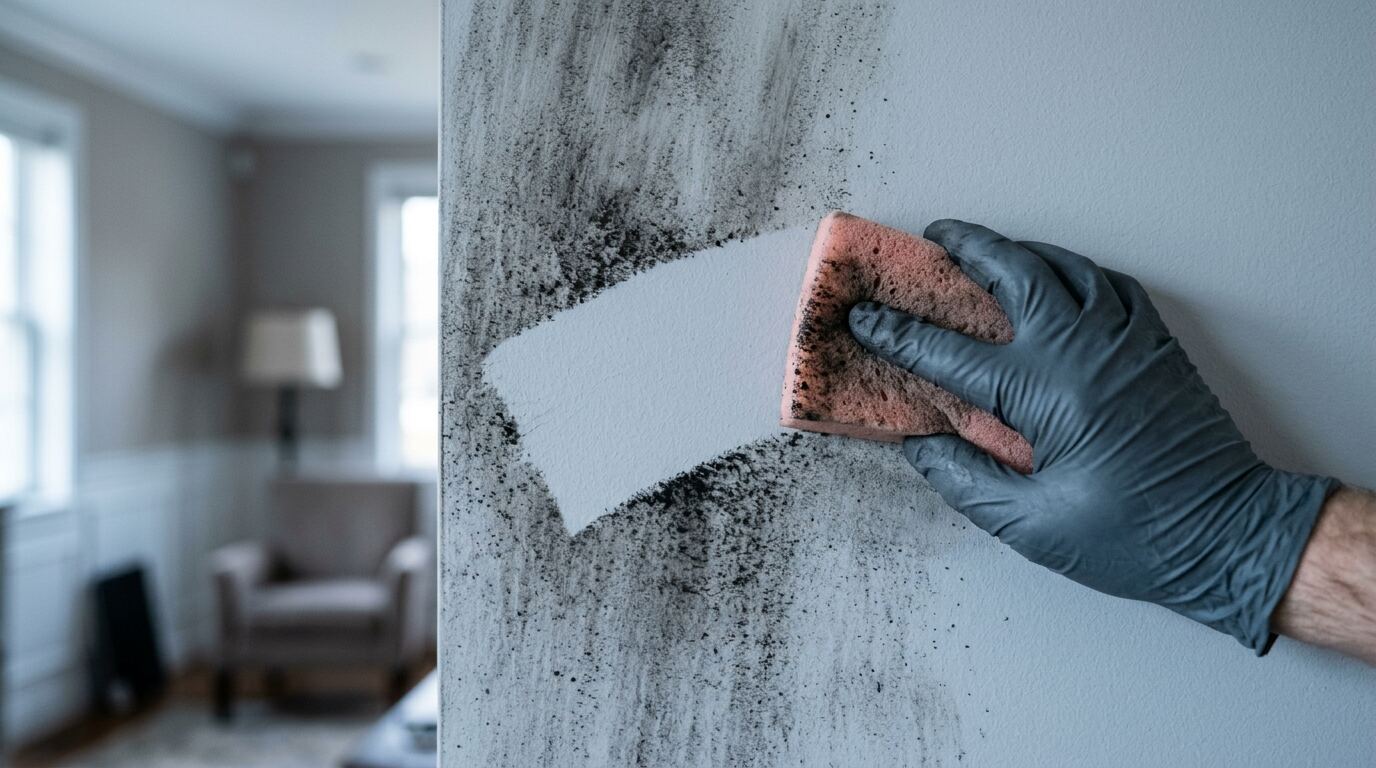
Enter the home only when the fire department says it’s safe. Structural damage, compromised wiring and lingering carbon monoxide are real risks.
The 8 mistakes
1. Wiping walls and ceilings with a wet cloth
Soot is oily and fine. Water and household cleaners smear it into paint and drywall, turning a cleanable surface into one that has to be primed or replaced. Soot comes off dry first, with dry chemical sponges and HEPA vacuums.
2. Shampooing carpet and upholstery
Heat and moisture set smoke residue into fibers. Professional cleaning uses methods matched to the type of smoke residue.
3. Turning on appliances and electronics
Anything exposed to heat, flame or firefighting water should be checked by an authorized technician first. Soot is conductive and corrosive.
4. Turning on ceiling lights or fans under a wet ceiling
Firefighting water may have reached the wiring. Leave fixtures off until an electrician confirms they’re safe.
5. Running the HVAC system
Your heating and cooling system will circulate soot through every room and into the ductwork. Keep it off until the system is inspected and cleaned.
6. Eating food stored near the fire
Canned and packaged food and drinks exposed to heat, smoke or water should be discarded. Heat can compromise seals, and smoke can penetrate packaging.
7. Sending clothes to a regular dry cleaner
Ordinary dry cleaning can lock smoke odor into fabric. Smoke-damaged textiles need specialized deodorization and cleaning.
8. Throwing things out before they are documented
Every damaged item is part of your insurance claim. Photograph and list it first. We create contents inventories as part of every fire job.
What smoke does to your health
Smoke is a mix of fine particles and gases, including carbon monoxide. Particles small enough to pass deep into the lungs remain on surfaces and in the air long after the fire. Residue causes eye irritation, coughing and headaches, and poses a greater risk for children, older adults and anyone with asthma, COPD or emphysema. Smoke also migrates toward cooler surfaces, so rooms that never saw flames — closets, spaces behind curtains, upstairs bedrooms — can be heavily contaminated.
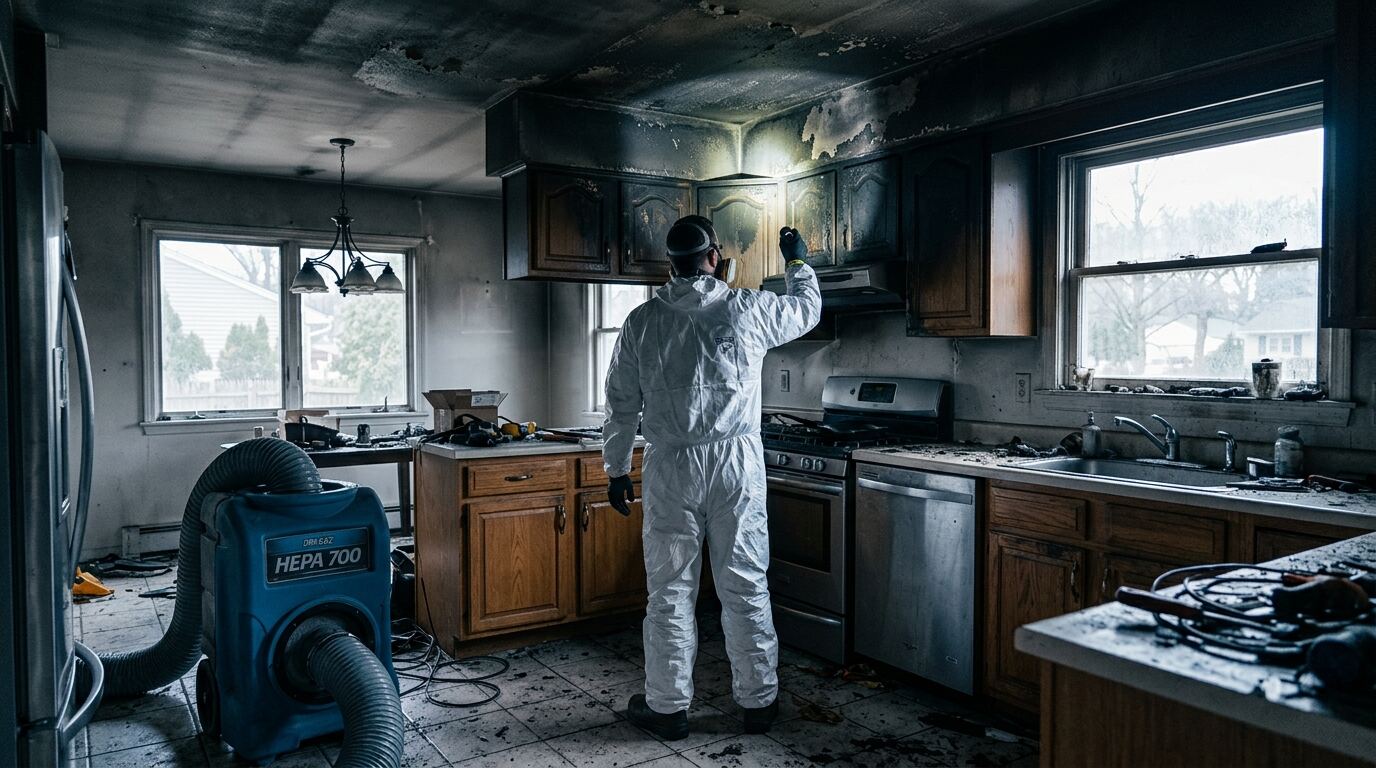
The right order for fire cleanup
- Secure the property: board-up and tarp openings
- Remove firefighting water and start drying
- Inventory and pack out salvageable contents
- Remove loose soot dry, then clean surfaces
- Clean the air and deodorize the structure
- Remove what can’t be saved, seal and rebuild
See how we handle each step on the fire and smoke damage restoration page and the odor removal page.
FAQ
Can I stay in the house after a small fire?
It depends on the extent of smoke, whether utilities are safe and who lives there. For young children, older adults and anyone with breathing problems, we recommend staying elsewhere until cleaning is complete. Homeowners policies usually include additional living expenses.
Does the smell ever really go away?
Yes — when the residue is actually removed and the structure deodorized and sealed. Air fresheners and ozone alone don’t fix it.