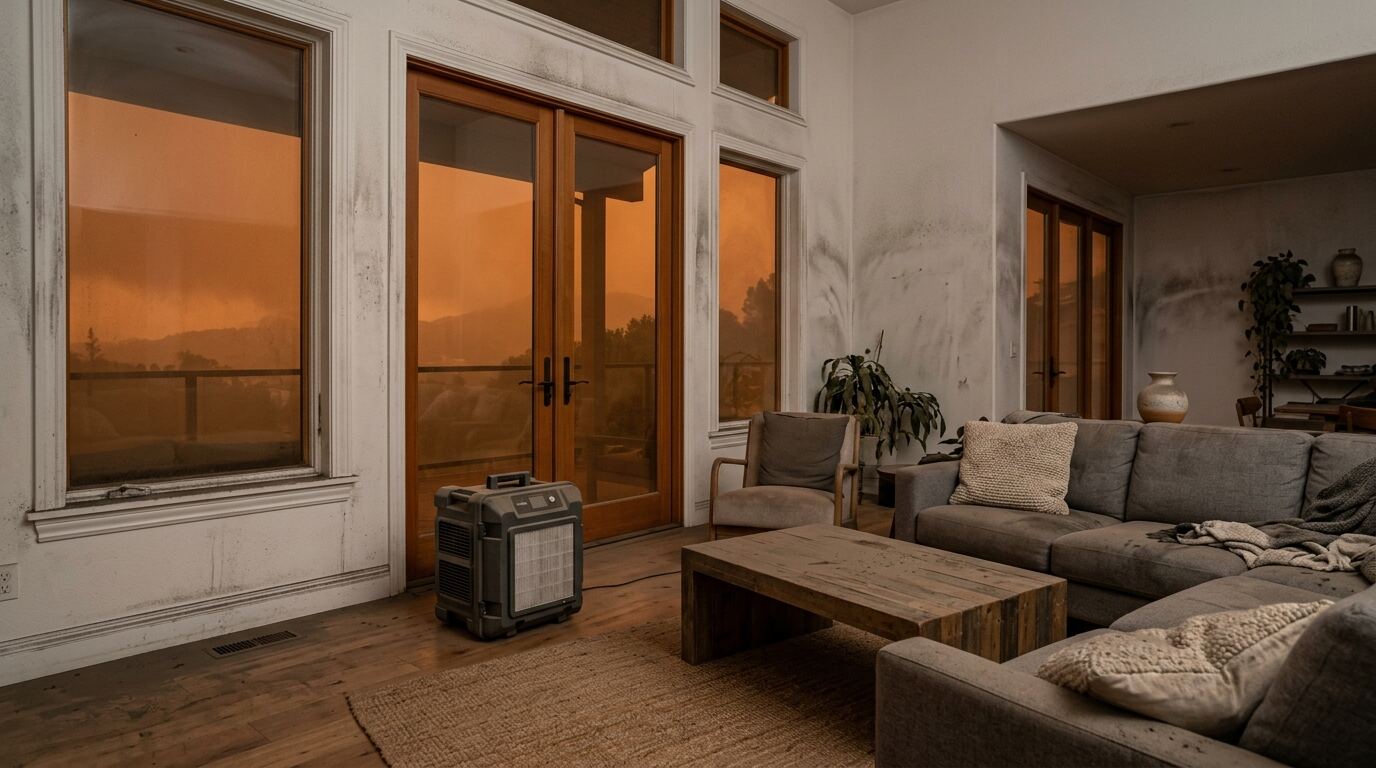
Follow local air quality guidance and evacuation orders. Wildfire ash can contain fine particles and residues from burned structures, vehicles and chemicals. Wear an N95 respirator, gloves and eye protection, and keep children and pets away while cleaning.
How wildfire smoke gets inside
- Attic vents, soffit vents and roof turbines
- HVAC systems pulling in outdoor air, and leaky ductwork in attics
- Gaps around doors, windows, fireplaces and plumbing penetrations
- Open windows or doors during the event
Signs of smoke damage
- A smoky or acrid odor that returns when the house warms up or the AC runs
- Gray or black film on window sills, blinds, light switches and white surfaces
- Ash in the attic, on carpet near doors and inside HVAC registers
- Discoloration on light-colored fabrics and walls
What you can do yourself
- Replace HVAC filters and keep the system off until it’s inspected if residue is heavy
- HEPA-vacuum light ash from hard floors and upholstery
- Gently damp-wipe hard, non-porous surfaces after vacuuming
- Launder washable clothing and linens separately
- Run a HEPA air purifier in occupied rooms
What to avoid
- Dry sweeping or using a leaf blower indoors — it puts fine particles back in the air
- Using a regular vacuum without a HEPA filter
- Scrubbing soot into painted walls with wet sponges
- Masking odor with sprays and candles
- Throwing out damaged items before documenting them
When to call a professional
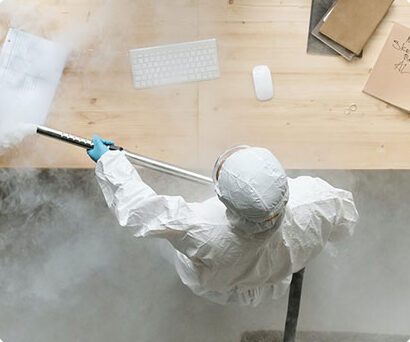
Call in professional cleaning when odor persists after a thorough cleaning, when soot is visible on walls and ceilings, when ash is in the attic or ductwork, or when anyone in the home has respiratory issues. Our Los Angeles team cleans surfaces and contents, cleans or recommends replacement of HVAC components, runs HEPA air scrubbers and uses thermal fogging and sealing where needed. See fire & smoke damage and smoke & odor removal.
Documenting a smoke claim
- Photograph residue on surfaces before cleaning — wipe a white cloth across a surface and photograph it.
- Note the dates of the fire event and smoke exposure.
- Keep receipts for filters, purifiers, cleaning and temporary housing.
- Report the claim promptly; smoke damage is generally a covered peril under homeowners policies.
- Ask for a professional inspection report to support the scope of cleaning.
See insurance claim help.
FAQ
Our house is far from the fire. Can it still have smoke damage?
Yes. Fine smoke particles travel long distances, and homes many miles away can collect ash in attics and HVAC systems.
Does homeowners insurance cover wildfire smoke?
Smoke is a covered peril in most homeowners policies. Carriers may ask for evidence of residue and odor, which is why documentation matters.